
Lee County Clerk Contact
North Carolina uses a unified Clerk of Superior Court structure for court records. The elected clerk in each county keeps Superior Court and District Court records and performs probate duties. The Judicial Branch court officials page explains that clerks are elected in all 100 counties for four-year terms, perform court recordkeeping functions, collect money due to the State or parties involved in cases, and act as probate judge for wills and estates.
In Lee County, the Clerk of Superior Court is housed at the Lee County Courthouse. The main phone is (919) 718-6300. The mailing address is Lee County Courthouse, PO Box 4209, Sanford, NC 27331. The courthouse is open Monday through Friday from 8:00 AM to 5:00 PM. The official contact directory lists separate routing for administrative, bookkeeping, civil, clerk, criminal, estates, juvenile, special proceedings, and special proceedings confidential contacts.
The official clerk role source is shown here: North Carolina court officials and clerks overview.
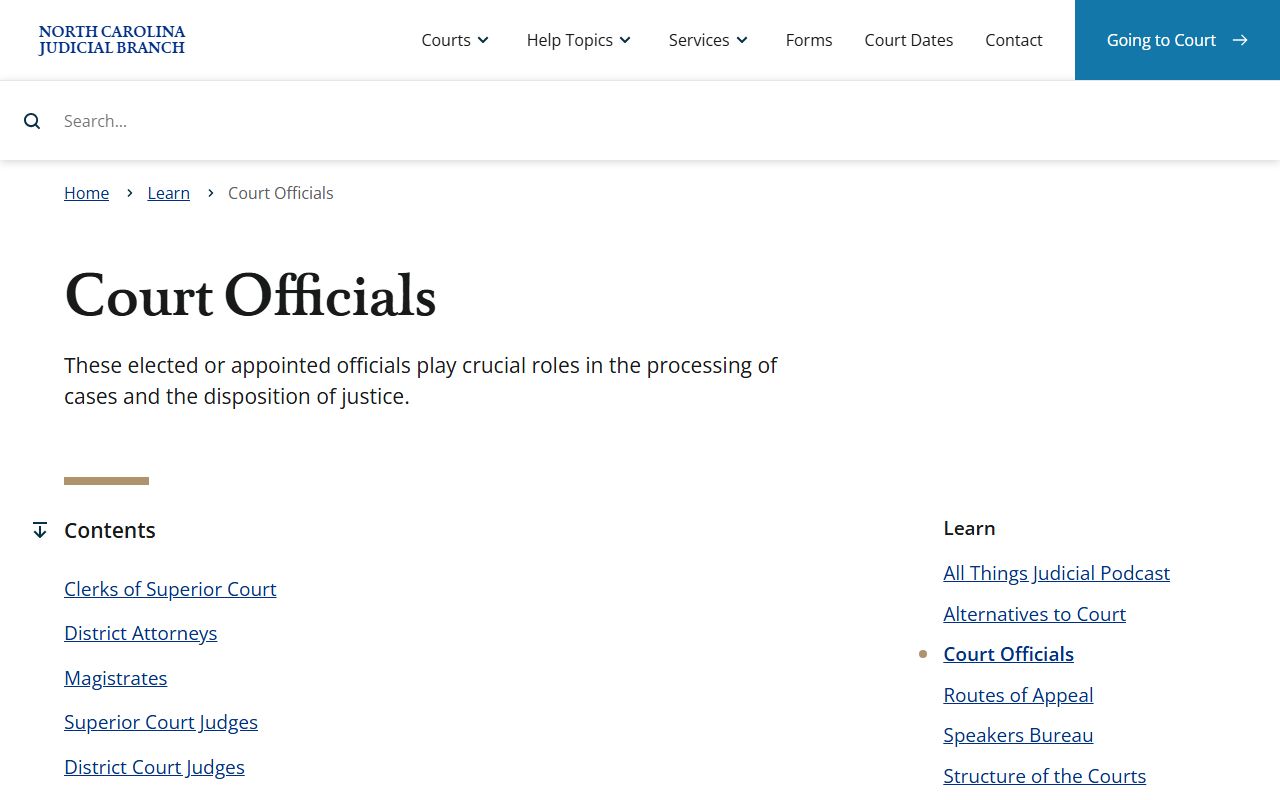
This state source confirms why the Lee County Clerk of Superior Court is both the court recordkeeper and the probate official.
Lee County Clerk of Superior Court
1400 S Horner Blvd
Sanford, NC 27330
(919) 718-6300
Monday-Friday, 8:00 AM-5:00 PM
Lee County Clerk Court Records
The Clerk of Superior Court maintains records for both Superior Court and District Court. The research lists civil actions, criminal actions, estates, special proceedings, judgments, liens, lis pendens, juvenile actions where access is allowed, court minutes, and related indexes maintained under North Carolina recordkeeping rules. The clerk is not just a filing counter. The office is the legal custodian for public court records in the county trial courts.
Public online access begins with the NC eCourts Portal. Public terminals are available for criminal, civil, special proceeding, and estate case information in clerk offices. Paper files can be viewed at the clerk's office in the county where the case is located. Background checks should use the county clerk's office rather than relying on Portal alone. Copy requests and certified copies also run through clerk staff.
- Superior Court records, including felony cases, high-value civil cases, and appeals from District Court.
- District Court records, including misdemeanors, infractions, divorce, custody, support, juvenile matters where access is allowed, and lower-value civil cases.
- Estate and probate files handled by the Clerk of Superior Court as ex officio Judge of Probate.
- Special proceedings, judgments, liens, lis pendens, dockets, indexes, and minutes kept by the clerk.
Request Lee County Certified Copies
A certified copy is a clerk-issued copy that carries official certification for legal use. It may be needed for a divorce judgment, estate filing, judgment record, or other court document. The research confirms that clerk staff can provide copies of court documents for a fee, but it did not locate a Lee-specific copy and certification amount in accessible official text. Check current charges with the clerk before mailing a request.
- Identify the court case by case number, record number, party name, or file date range when possible.
- Search Portal first if the case is modern and public, then confirm whether the document itself is available online or only through the clerk.
- Contact or visit the Lee County Clerk of Superior Court for certified copy requirements and current fee amounts.
- State the document needed, the number of copies, and whether certification is required.
- Use the clerk's payment and delivery instructions, especially if the request will be handled by mail.
Lee County Request Form Fields
Lee County has a public records request path through a GovOS or SeamlessDocs form, but the research says the static form fields were not visible in available text extraction. Court records are also governed by court-specific rules, so a general county records form may not be the best route for a court file. The table below lists the practical fields a clerk copy request should contain without claiming that these are the exact GovOS form labels.
| Request Detail | Needed? | Why It Matters |
|---|---|---|
| Case or record number | Best if known | Lets clerk staff locate the precise file faster. |
| Party names | Yes | Needed for name search when a number is unknown. |
| Case type | Helpful | Distinguishes civil, criminal, estate, special proceeding, traffic, or family records. |
| Document requested | Yes | Examples include judgment, order, inventory, disposition, or docket entry. |
| Certified or plain copy | Yes | Certification affects use and fee. |
| Requester contact | Yes | Needed for fee quotes, pickup, mail, or follow-up. |
Lee County Clerk Fees
The verified Lee County payment research is strongest for court fees, fines, and traffic citations. Eligible mail payments must use money order or certified check, payable to the Lee County Clerk of Superior Court. Cash and personal checks should not be sent by mail. For court document copies, the research confirms a fee applies but does not provide a Lee-specific amount in accessible official text.
| Item | Verified Amount or Rule |
|---|---|
| Court document copies | Fee applies; Lee-specific amount not located in accessible official text. |
| Certified court copy | Fee applies; confirm current certification cost with the clerk. |
| Mail payment for court fees, fines, or eligible citations | Money order or certified check only. |
| Cash by mail | Not accepted. |
| Personal check by mail | Not accepted. |
| Certified marriage certificate | $10.00 each through the Register of Deeds, not the clerk. |
Lee County Clerk Probate Role
The Clerk of Superior Court also acts as the probate judge for wills and estates. Estate administration, wills, letters testamentary, letters of administration, inventories, accountings, small estates, summary administration, year’s allowance, guardianships, and related special proceedings are handled through the clerk. For more detail on estate search and Guide & File probate tools, use the Lee County Clerk of Superior Court as ex officio Judge of Probate record path.
Probate is still a court function. Estate files can be searched online where Portal access allows, reviewed at the clerk's office, or requested as copies. Some guardianship or sensitive filings may be restricted. A contested will caveat can be heard by a Superior Court judge, but the clerk remains the starting office for estate qualification and routine estate records.
Clerk vs Register of Deeds
Lee County has a clear split between court records and recorded vital or land records. The Clerk of Superior Court handles court files. The Lee County Register of Deeds handles marriage licenses, marriage certificates, birth certificates, death certificates, military discharges, assumed names, notary records, deeds, deeds of trust, plats, powers of attorney, and similar recorded transactions. The Register of Deeds office is at 1300 South Horner Blvd., Sanford, NC 27330, phone (919) 718-4585.
| Record Needed | Correct Office | Reason |
|---|---|---|
| Divorce judgment | Clerk of Superior Court | It is a court order from the divorce case. |
| Marriage certificate | Register of Deeds | Marriage records are vital records held by ROD. |
| Criminal case file | Clerk of Superior Court | Criminal actions are court records. |
| Estate file | Clerk of Superior Court | The clerk serves as probate judge. |
| Deed or deed of trust | Register of Deeds | Recorded real-estate instruments are ROD records. |
Note: Court records are not held by a separate county clerk court office in North Carolina.
Federal Records Are Separate
Lee County court records should not be confused with federal records. Federal civil, criminal, and bankruptcy cases are searched through federal systems such as PACER and CM/ECF, not the Lee County Clerk of Superior Court. Lee County is in the Middle District of North Carolina for federal court purposes, and bankruptcy records use the U.S. Bankruptcy Court for the Middle District of North Carolina.
The federal bankruptcy source is shown here: U.S. Bankruptcy Court for the Middle District of North Carolina.
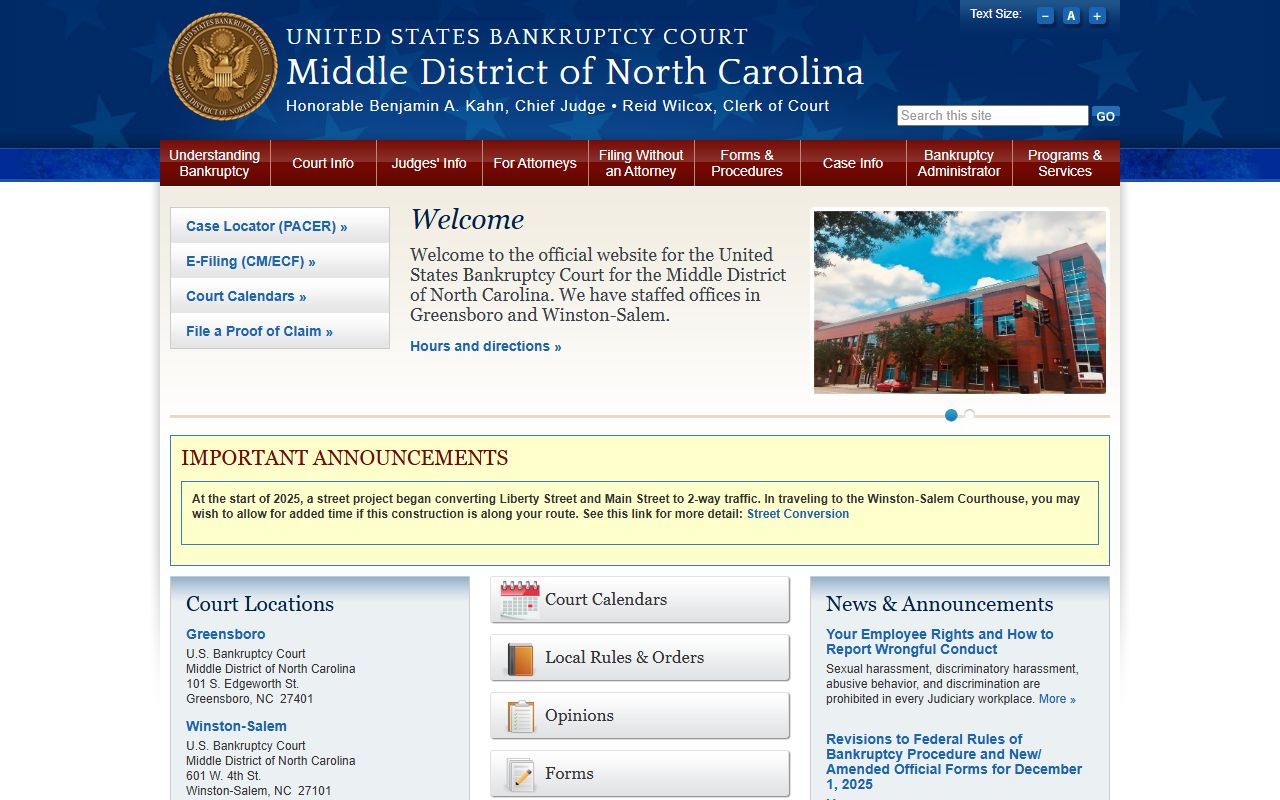
This source helps separate Lee County clerk records from bankruptcy records that belong in the federal court system.
The national PACER lookup source is shown here: PACER Court CM/ECF lookup.
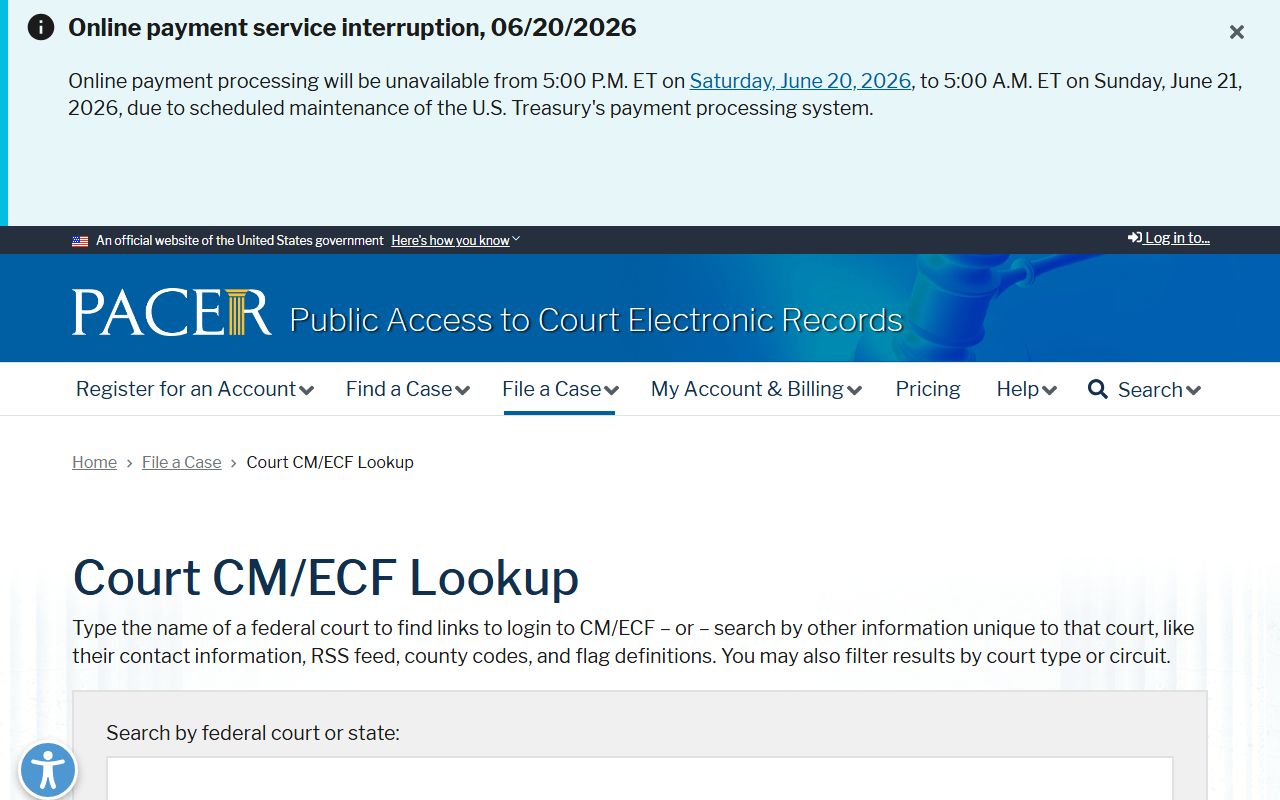
PACER is relevant only when the case is federal, not when the record is a Lee County Superior Court or District Court file.