
How to Search Lee County Court Records
The main online path for Lee County court records is the NC eCourts Portal. The Lee County Judicial Branch page directs users to Portal for searches by name, citation number, county, and other criteria. Portal includes Smart Search for case records, a hearing search for court dates, a payment path for eligible criminal, infraction, probation, and parole matters, and NC Judgment Search for judgment indexes. Lee County was in the first eCourts pilot group, so its court records have been tied to the statewide Portal since the February 2023 rollout.
Start with the best identifier available. A case number or record number is more precise than a common name. Party names work, but spelling, middle names, suffixes, business names, and wildcard rules matter. If the online result is incomplete, the next access channel is the Clerk of Superior Court. The clerk can help with public terminals, paper files, certified copies, older records, and background-check routing. For hearing dates only, the hearing search may be faster than opening a full case record.
The manifest image for this page includes the official NC eCourts Portal landing page, which is the public online starting point for Lee County court records.
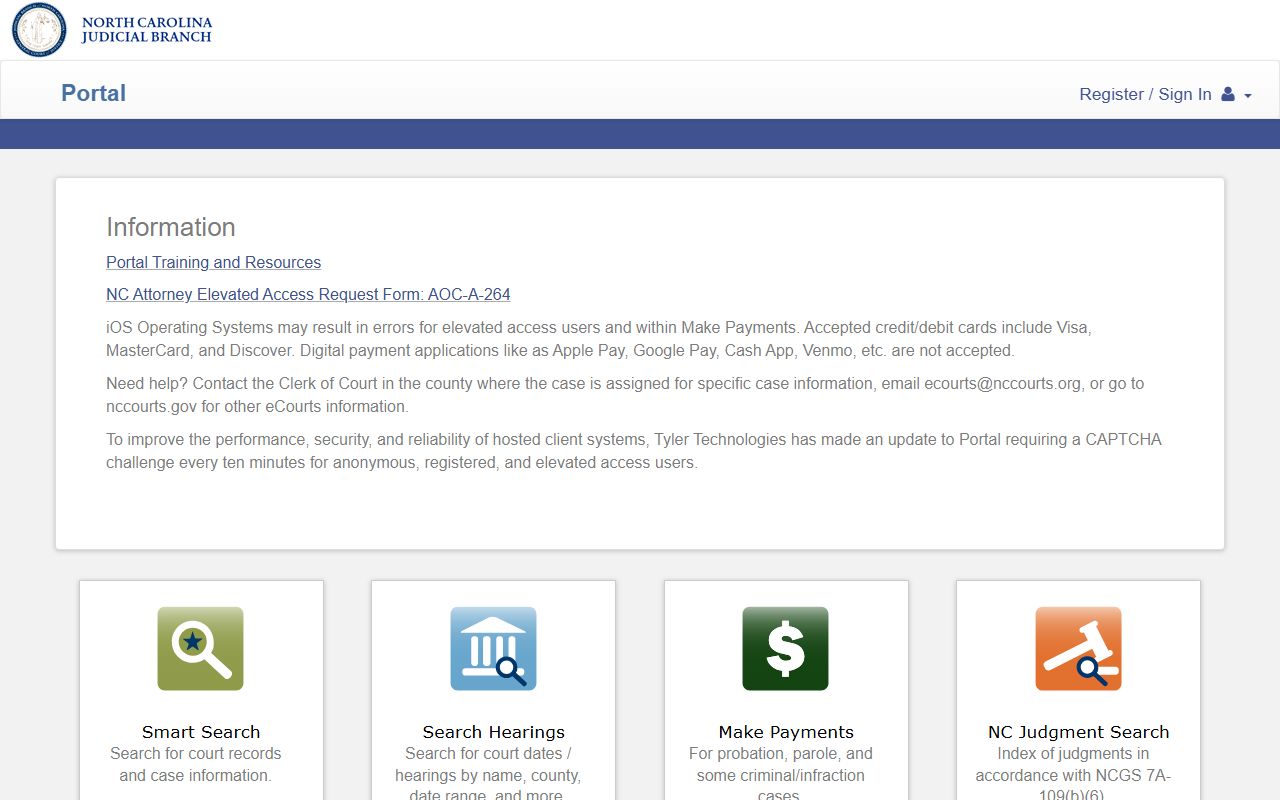
The Portal view is useful for broad searching, but the clerk remains the source for case-file access when a search result does not show the record needed.
- Open the NC eCourts Portal and choose Smart Search for a case search or hearing search for a court-date lookup.
- Enter a record number or a party name. For wildcard name searches, Portal instructions require enough letters before the wildcard.
- Use Advanced Filtering Options to limit the location to Lee County and add date, party, case-status, or case-type filters where useful.
- Review the case summary, docket entries, hearing information, and any public documents or judgment information shown for that record.
- For certified copies, paper files, background checks, or records not visible online, contact or visit the Lee County Clerk of Superior Court.
Lee County Court Records Search Fields
Smart Search has both a broad search box and split-name fields. The broad field accepts a record number or a name in last, first middle suffix format. The split fields let a user enter last, first, middle name, and suffix. Advanced filtering adds location, party type, search type, date-of-birth range, case status, case type, filing date range, and other identifiers. Portal also requires JavaScript, cookies, supported browser behavior, and a CAPTCHA for anonymous, registered, and elevated access users.
| Field Label | Type | Required | Notes / Format |
|---|---|---|---|
| Enter a Record Number or Name | Text | Yes unless using split-name fields | Use last, first middle suffix format, or enter at least four characters for wildcard case-number search. |
| Enter a Last Name | Text | Required if using split-party name | Portal marks the last-name field with an asterisk. |
| Enter a First Name | Text | Required if using split-party name | Portal marks the first-name field with an asterisk. |
| Enter a Middle Name | Text | No | Optional middle-name field. |
| Suffix | Dropdown | No | Static extraction showed validation text, but not the option list. |
| Filter by Location | Dropdown or multi-select | No, unless expanded with no location chosen | Options include All Locations and North Carolina counties, including Lee County. |
| Search by | Dropdown or radio | No | Party Name, Nickname, Business Name, and Sounds Like were identified. |
| File Date Start / End | Date | No | Useful when narrowing a common name or a high-volume business search. |
| Case Type / Case Status | Dropdown | No | Exact options were not visible in static extraction. |
Types of Lee County Court Records
Lee County court records come from Superior Court, District Court, magistrate matters, estates before the clerk, and judgment indexes. Civil files may include complaints, answers, motions, notices, orders, judgments, liens, lis pendens, foreclosures, partitions, condemnations, and related docket entries. Criminal files may include warrants, criminal summonses, magistrate orders, charging documents, indictments, appearances, bonds, pleas, dispositions, sentencing orders, probation conditions, appeals, fines, fees, and restitution. Family cases include divorce, custody, child support, equitable distribution, and domestic violence protective order matters.
Not every record that sounds local belongs in a court file. Marriage licenses and marriage certificates are handled by the Lee County Register of Deeds, while divorce judgments are court records held by the clerk in the county where the divorce was granted. Jail custody information belongs to the sheriff and detention facility. Law-enforcement reports route to the agency involved and may be limited by criminal investigation rules. A traffic citation is a court case, while a driver-history record is a separate licensing record.
The official Judicial Branch court-records help page explains online access, courthouse terminals, paper files, and copy channels for Lee County court records.
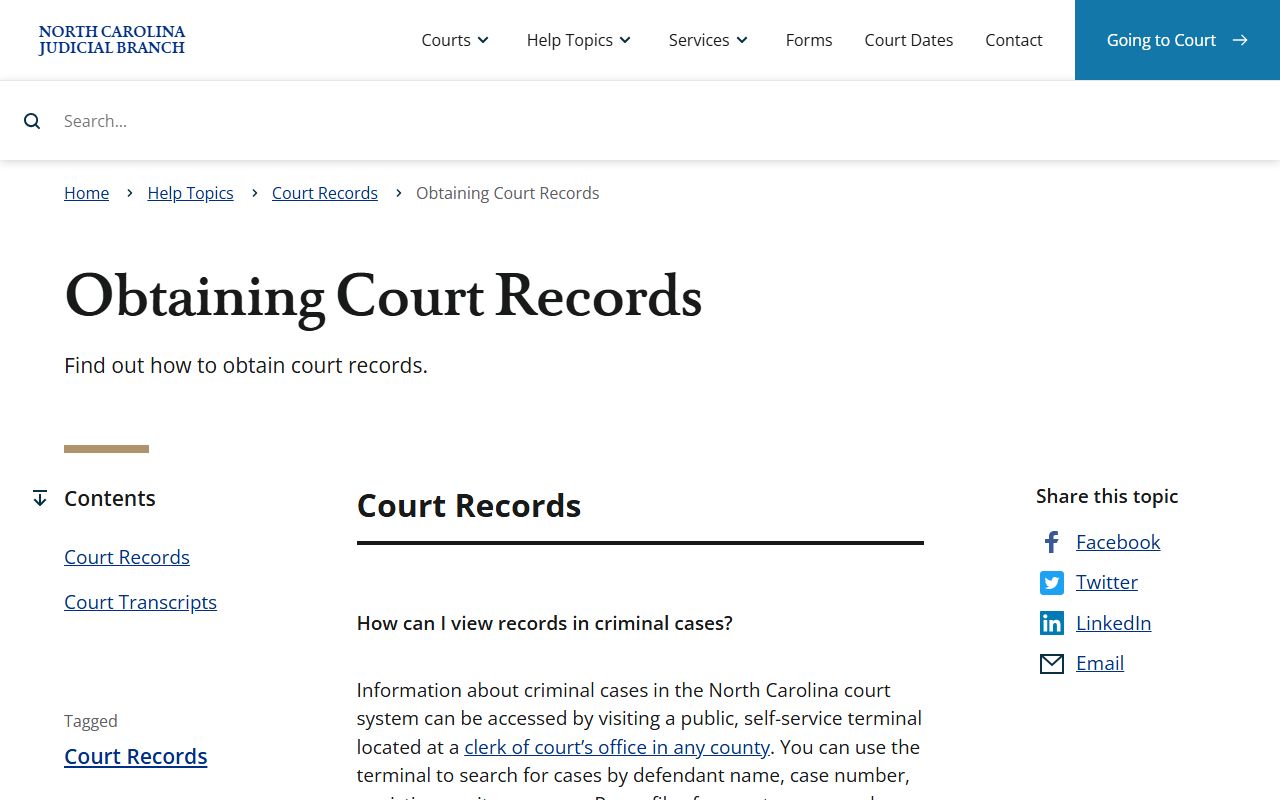
That statewide help page is important because Lee County uses the same court-record access structure as other North Carolina counties in the unified system.
- Civil records include lawsuits, judgments, liens, foreclosure matters, and special proceedings.
- Criminal records include charges, court settings, pleas, dispositions, sentencing, bonds, and financial obligations.
- Family records include divorce, custody, support, and protective-order proceedings, with some sensitive details restricted.
- Estate records are handled by the Clerk of Superior Court in the clerk's probate role.
- Traffic records include citation cases, waivers, reductions, dismissals, fines, costs, and failure-to-appear events.
What Lee County Court Records Show
A Lee County court record usually identifies the case, the parties, the filing date, the court location, and the type or status of the matter. In a civil case, the record may show the plaintiff, defendant, claims, motions, orders, judgment, and lien or lis pendens activity. In a criminal case, it may show the defendant, charges, offense class, bond, hearings, pleas, disposition, sentence, probation, restitution, and financial obligations. The docket is the timeline, while the file may contain pleadings, orders, notices, and other documents.
| Field | What It Shows |
|---|---|
| Case number or record number | The unique identifier used in Portal, clerk indexes, and case-file requests. |
| Party names | Plaintiffs, defendants, petitioners, respondents, estate names, or criminal defendants where public access allows. |
| Filing date | The date the case or filing was opened, searchable by start and end date filters. |
| Case type and status | The kind of case and whether it is pending, disposed, closed, or otherwise classified. |
| Docket entries | Filings, settings, hearings, orders, motions, continuances, judgments, pleas, and dispositions. |
| Hearing information | Court date, court location, event type, and related scheduling details when available. |
| Financial fields | Payments, fines, costs, restitution, probation, parole, or eligible criminal and infraction payment data. |
| Redactions | Restricted or protected content such as social security numbers, minor details, and sealed matter references. |
Lee County Court Records Public Access
North Carolina court-record access starts with court-specific law. N.C.G.S. 7A-109 requires clerk-maintained records, files, dockets, and indexes to be open during regular office hours unless another law prohibits access. Chapter 132 governs many public records held by state and local agencies, but court files also have their own statutes and court rules. That distinction matters in Lee County because the Clerk of Superior Court, sheriff, Register of Deeds, and county manager do not all hold the same kind of record.
For criminal matters, N.C.G.S. 132-1.4 treats criminal investigation and intelligence records differently from public court records. Returned warrants and certain criminal process records may become court records unless sealed. N.C.G.S. 132-1.10 protects social security numbers and personal identifying information. For a practical search, use Portal first, then ask the Clerk of Superior Court for the paper file or a certified copy when the online record is not enough.
The manifest image for this section shows the North Carolina Chapter 132 public records statute index.
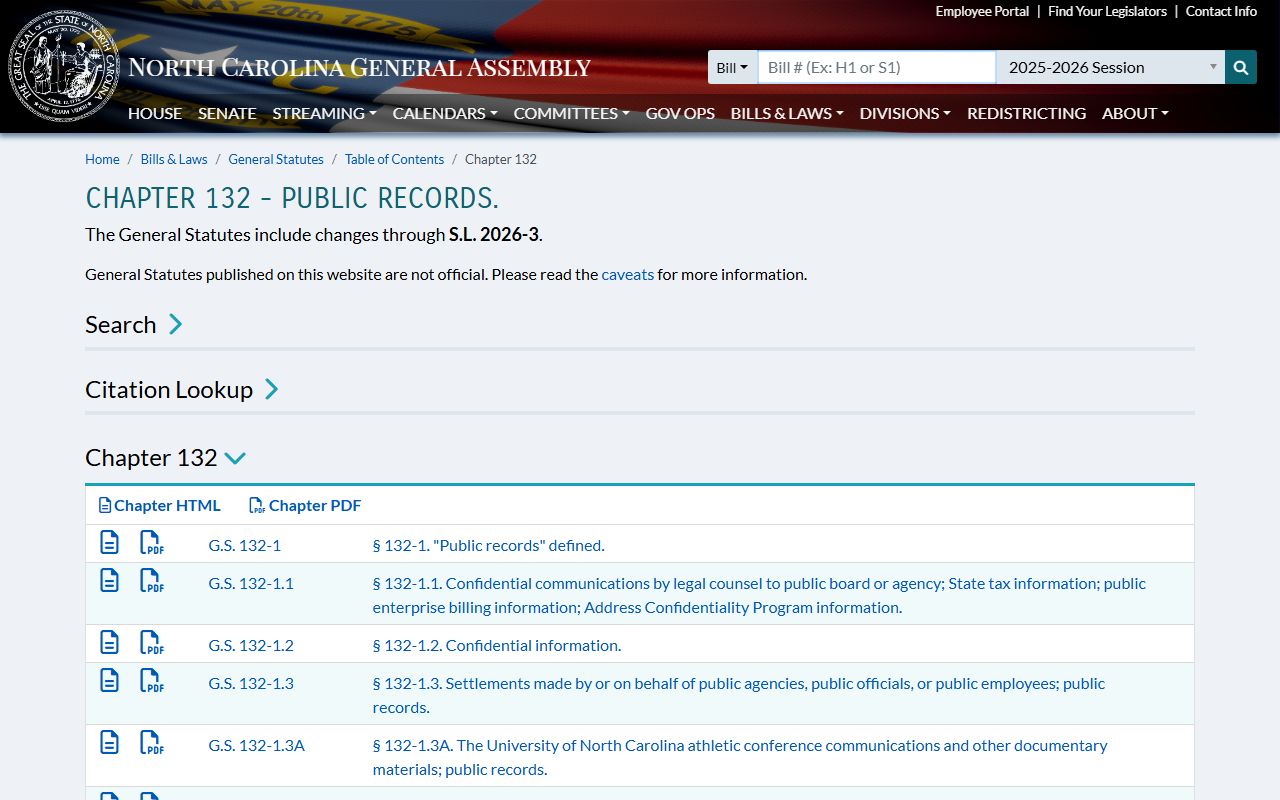
Chapter 132 is useful background for county and agency records, but the clerk's court-record duties are also controlled by the court recordkeeping statute.
Note: Court records may be public even when police investigative reports from the same incident remain limited.
Restricted Lee County Court Records
Public access is broad, but it is not complete. Juvenile delinquency, abuse, neglect, dependency, and undisciplined matters are District Court juvenile cases with restricted access. Adoption files are confidential. Mental health and involuntary commitment records are sensitive and generally not searched like ordinary civil cases. A judge can seal particular filings or an entire matter. An expunction can remove a qualifying charge or conviction from ordinary public access after the required process is completed.
North Carolina expunction rules depend on the offense, disposition, age, criminal history, and waiting period. The Judicial Branch expunction page explains that expunction can seal or destroy state records of an arrest, charge, or conviction. Under N.C.G.S. 15A-145.5, some nonviolent misdemeanors and felonies may be eligible after set waiting periods and required findings, while impaired driving, violent offenses, sex-registration offenses, and many other categories are excluded. Juvenile access is also limited under N.C.G.S. 7B-3000.
The official personal identifying information statute is one of the manifest sources for Lee County court records.
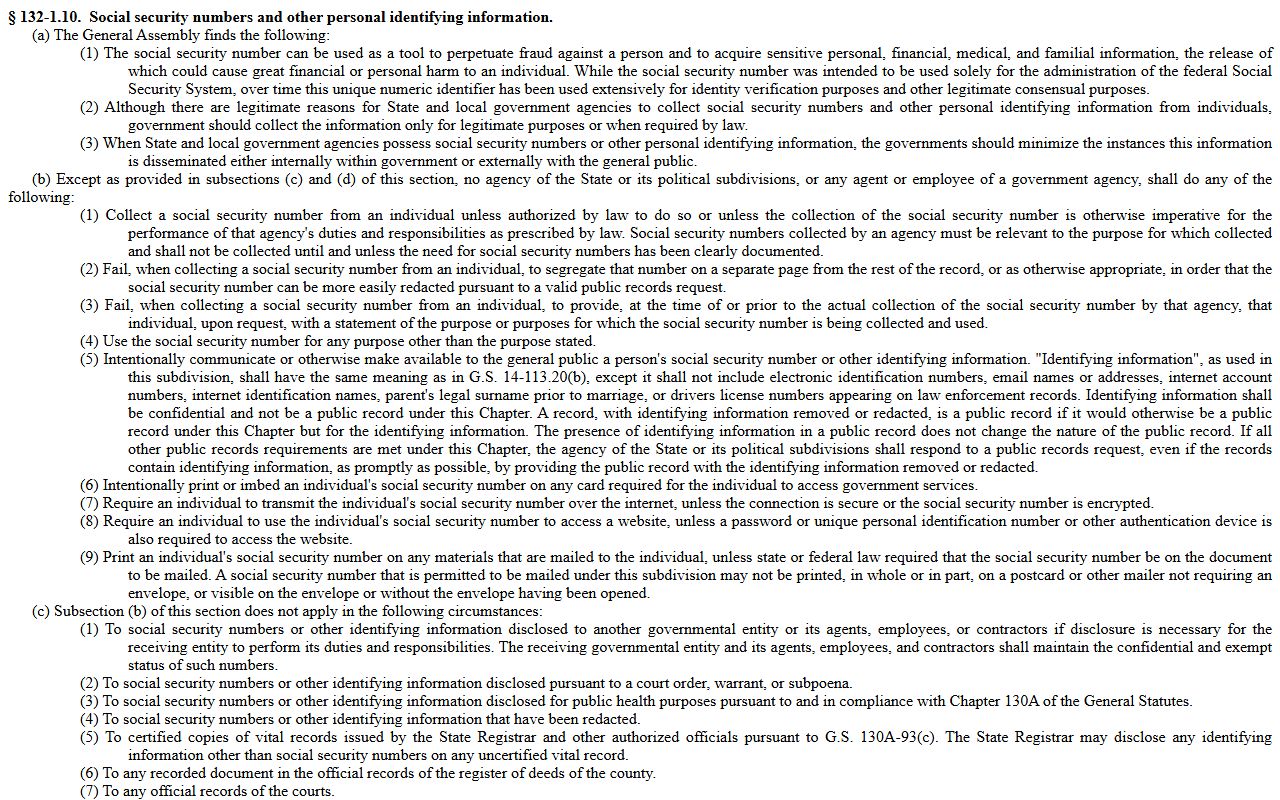
Those privacy limits explain why a public case search may show a docket entry while withholding a document, identifier, or confidential detail.
Lee County Court Records Requests
In-person access goes through the Clerk of Superior Court at the Lee County Courthouse. Public self-service terminals in a clerk's office can be used for criminal, civil, special proceeding, and estates case information. Criminal cases may be searched by defendant name, case number, or victim and witness name where access rules permit. Civil, special proceeding, and estate records can also be checked at public terminals. The paper file is viewed at the clerk's office in the county where the case is located, so a Lee County case file belongs at the Lee County clerk's office unless transferred or otherwise directed by the court.
Copies may be made for a fee, but the Lee County-specific court copy and certification schedule was not located in accessible official text. For agency records outside the court file, Lee County also provides an official public records request path. Court records, however, should not be treated as ordinary county-manager records when the item is a clerk-maintained case file. Background checks also route through the county clerk's office rather than Portal.
Lee County's official GovOS public records request form appears in the image manifest for court records.
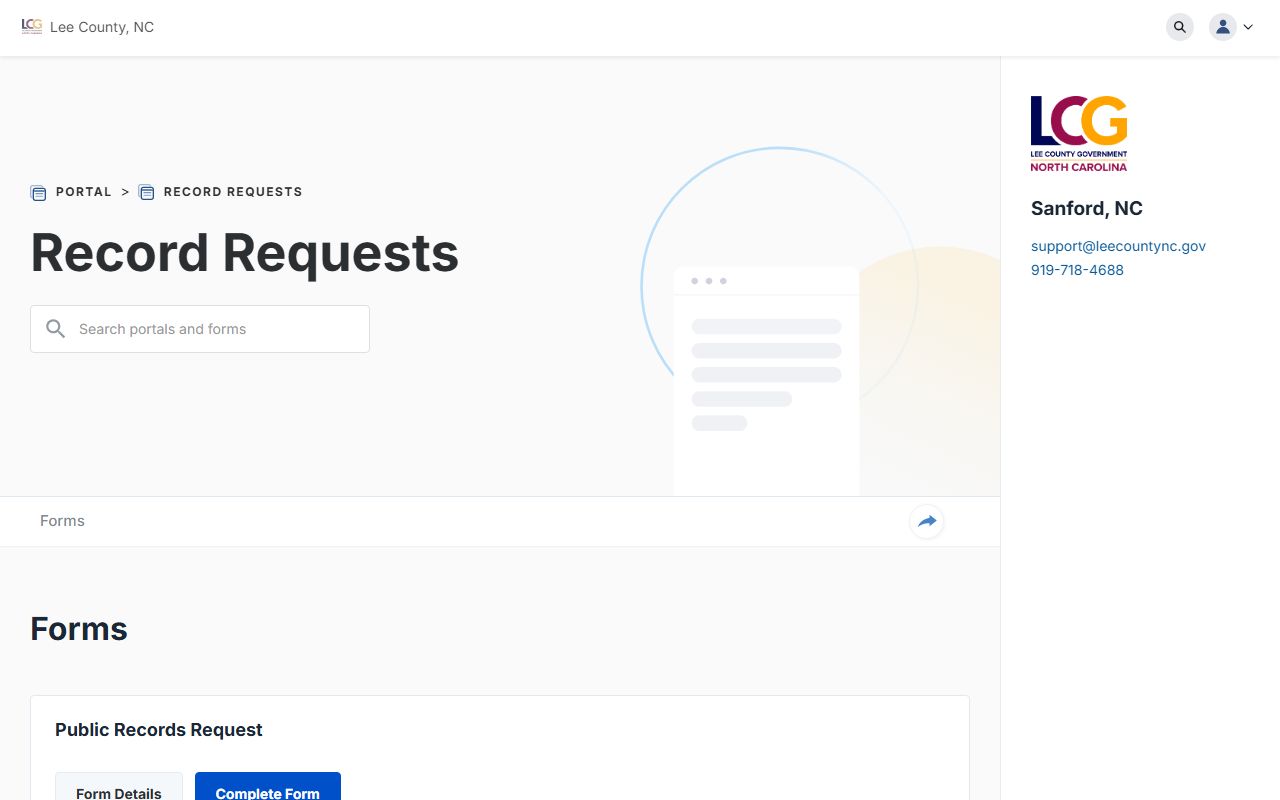
The county request form is best reserved for county-held records, while court case files should be requested through the Clerk of Superior Court.
Clerk of Superior Court
1400 S Horner Blvd
Sanford, NC 27330
(919) 718-6300
Monday-Friday, 8:00 AM-5:00 PM