
Lee County Criminal Court Records
Criminal court records in Lee County are kept by the Clerk of Superior Court at the Lee County Courthouse. North Carolina uses a unified court system, so the clerk maintains records for both Superior Court and District Court. That matters because a misdemeanor, a felony first appearance, a traffic crime, and an appeal from District Court may all be searched through the same court-record system even though each follows a different path.
Lee County is in Superior Court District 12 and District Court District 12. Superior Court handles felony criminal cases and misdemeanor or infraction appeals from District Court. District Court handles misdemeanors, infractions, juvenile matters, and magistrate-related criminal process. Magistrates may issue arrest warrants, set bail, accept certain minor pleas, and handle first stages of criminal process. The court record begins to take shape when criminal process, a citation, a magistrate order, an indictment, or another charging paper enters the court file.
The North Carolina Judicial Branch criminal-case page is a useful statewide starting point for terminology and process. The source page for criminal cases in North Carolina explains the State prosecutes criminal cases through the district attorney. The screenshot below comes from that official help page.
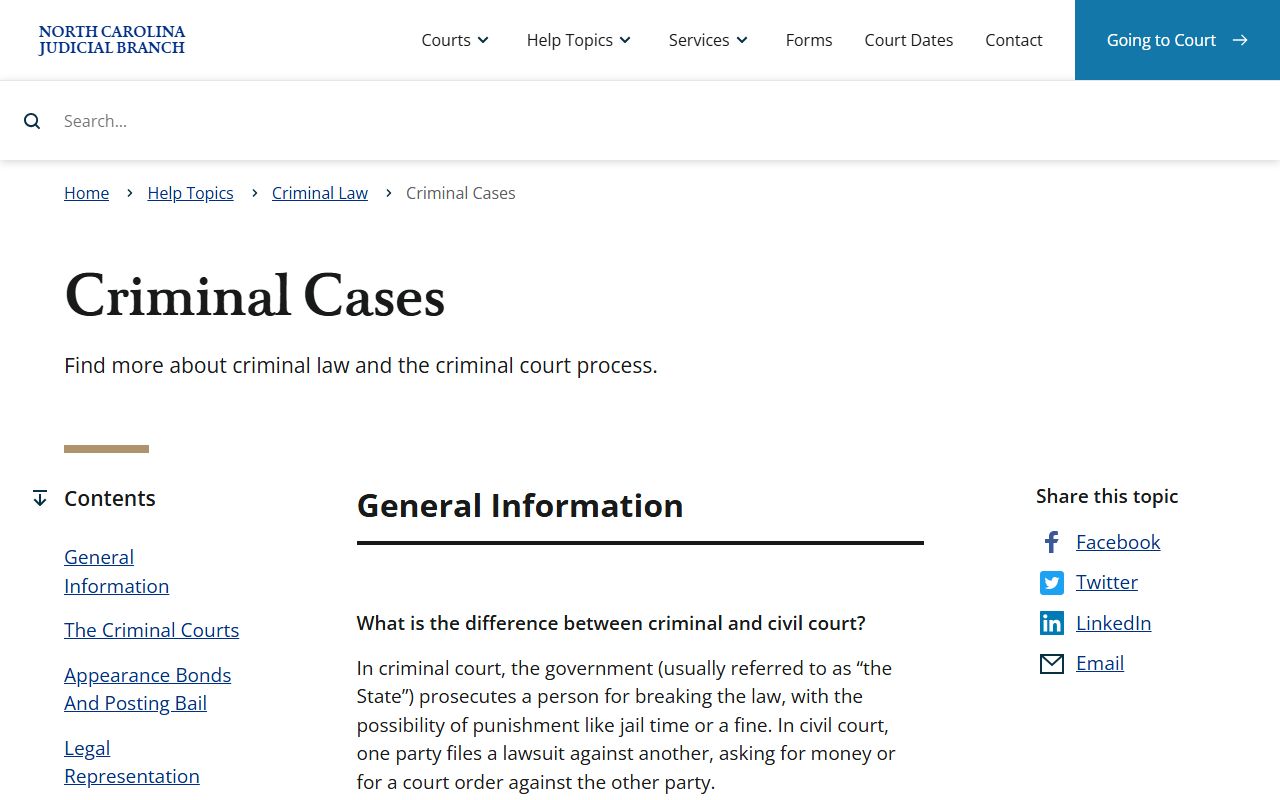
For Lee County users, that state process connects to the local clerk, magistrates, District Attorney, jail, and NC eCourts Portal.
Search Lee County Criminal Records
The main online route is the NC eCourts Portal. Lee County was part of the first eCourts pilot group, so local cases are searched through the statewide Portal rather than a county-only database. Smart Search accepts record number or name searches, and advanced filters can narrow by location, party type, date fields, case type, status, and other visible fields. If the online result is incomplete, the clerk's public terminal and paper file remain important access channels.
- Open the NC eCourts Portal and use Smart Search for a defendant name or record number.
- Use Lee County as the location filter when the search returns cases from more than one county.
- Open the criminal case result and review the docket, charge entries, hearing events, and disposition fields that are public.
- Use the Portal hearing search when the goal is a court date rather than the full case file.
- Contact the Lee County Clerk of Superior Court for paper files, older records, certified copies, and background-check access.
Criminal cases can also be checked at public self-service terminals in a clerk's office by defendant name, case number, or victim or witness name where access is allowed. The Judicial Branch states that people performing background checks should use the county clerk's office rather than relying on Portal alone. Lee County paper criminal files are reviewed through the clerk in the county where the case is located, and copy fees may apply.
Lee County Case Flow
A Lee County criminal case file changes as the case moves through court. A single arrest or citation can produce several docket entries, and the final record may look different from the first charge list. Felony matters may start in District Court for early hearings and later move to Superior Court. Misdemeanors and infractions usually remain in District Court unless appealed. The arrest records and court charges page focuses more closely on the arrest-to-charge side, while this criminal court record page follows the case through outcome.
Case flow: Charges Filed › Arraignment › Pretrial / Motions › Plea or Trial › Disposition › Sentencing
| Stage | What Happens |
|---|---|
| Charges filed | A citation, warrant, summons, magistrate order, information, or indictment identifies the alleged offense and starts the court tracking record. |
| Arraignment or first setting | The defendant is advised of the charge, counsel issues may be addressed, and the next court date is set. |
| Pretrial and motions | The docket may show continuances, discovery disputes, bond changes, suppression motions, subpoenas, and other requests. |
| Plea or trial | The record may show a guilty plea, not-guilty plea, trial verdict, dismissal, reduction, or other resolution for each charge. |
| Disposition and sentence | The final outcome and punishment appear as disposition, sentence, probation, fines, costs, restitution, or jail or prison commitment. |
Superior Court dates may not appear on the jail page because an inmate must appear before a Superior Court judge when called. The jail page also says court dates are updated within 48 business hours after the detention facility receives them from the courts, so Portal and clerk records remain the better sources for the official court schedule.
What Lee County Criminal Records Show
Common fields in a Lee County criminal case record come from NC eCourts records, clerk files, and court docket entries. Portal fields confirmed in the research include record number or name search, party names, filing date filters, case type, case status, court location, docket entries, hearing information, financial fields, and sometimes documents depending on access. A full case drilldown was not confirmed in static research, so the table describes reliable court-record categories rather than promising every field in every case.
| Field | What It Shows |
|---|---|
| Case or record number | The identifier used in Portal, clerk indexes, hearing searches, payments, and copy requests. |
| Defendant | The person charged in the criminal case, with name indexing controlled by court records and access rules. |
| Charges | Offense descriptions, statutes, charge level, warrant or citation references, and later amendments when shown. |
| Docket entries | Filings, hearings, orders, continuances, motions, pleas, judgments, and scheduled court events. |
| Disposition | The result of the case or charge, such as dismissed, guilty, not guilty, responsible, or other outcome. |
| Sentence | Punishment after conviction, including probation, active time, fines, fees, restitution, or other court conditions. |
The Judicial Branch page for expunctions explains how some criminal charges or convictions can later be removed from ordinary public access. The captured image below is tied to that official statewide expunction resource.
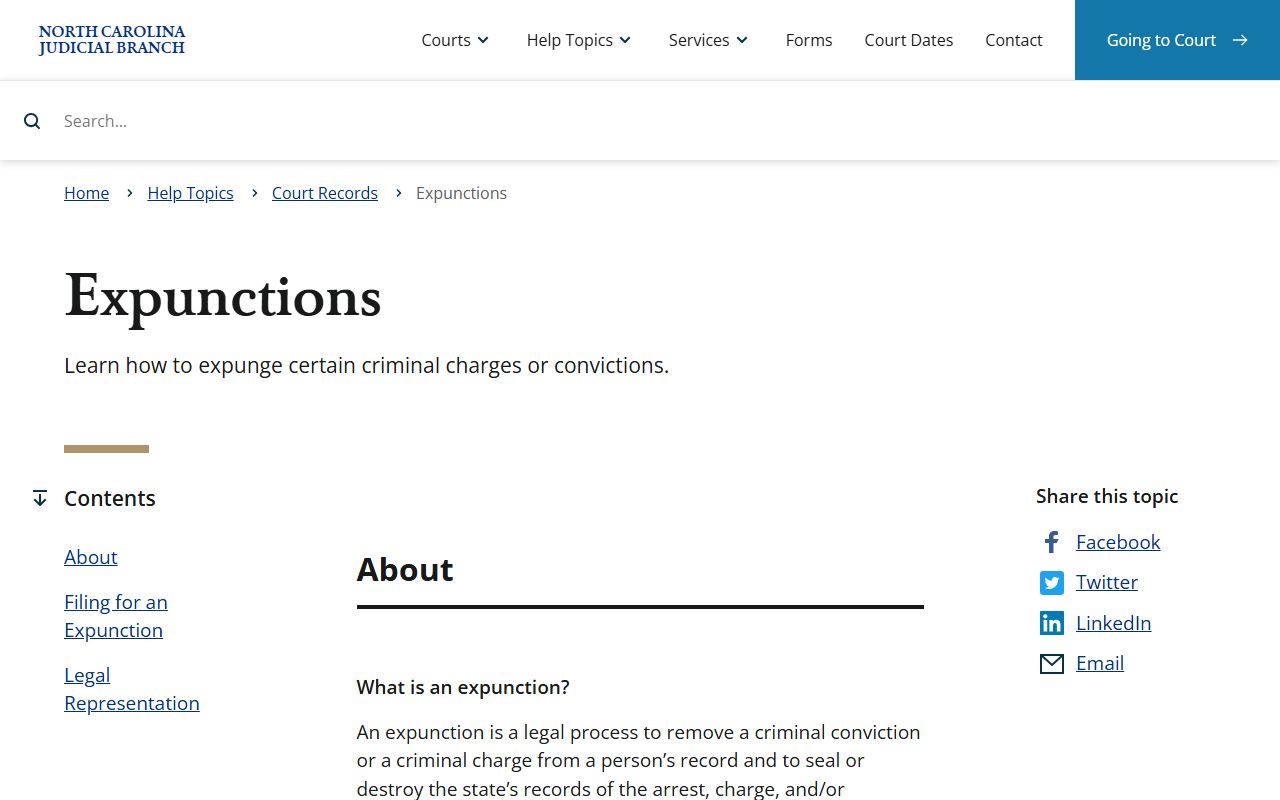
That source is important when a Lee County search does not show an older case that may have been expunged or otherwise restricted.
Charges vs Convictions
A charge is an accusation. A conviction is a final finding or plea of guilt. Lee County criminal court records may show charges that were filed and later dismissed, reduced, consolidated, superseded by indictment, or resolved by plea to a different offense. A criminal record search should therefore read each charge line, each disposition, and the final judgment rather than treating the first accusation as the final outcome.
| Charge | Conviction | |
|---|---|---|
| Stage | Accusation or criminal process filed with the court. | Final guilty plea or guilty finding by the court. |
| Proof point | Based on probable cause, citation, warrant, summons, indictment, or related process. | Requires a plea or verdict and entry of judgment. |
| Record meaning | May be pending, amended, dismissed, reduced, or superseded. | May create sentence, probation, fines, fees, restitution, and collateral effects. |
Dispositions and Sentences
Disposition means the outcome of a case or charge. In a Lee County criminal court record, common outcome language may include guilty, not guilty, dismissed, responsible, not responsible, judgment entered, or other court-specific terms. A sentence is different from a disposition. The sentence states what the court ordered after conviction, such as active confinement, supervised probation, unsupervised probation, restitution, fines, costs, community conditions, or other punishment.
The N.C.G.S. 15A-145.5 image source concerns expunction of certain nonviolent misdemeanors and felonies.
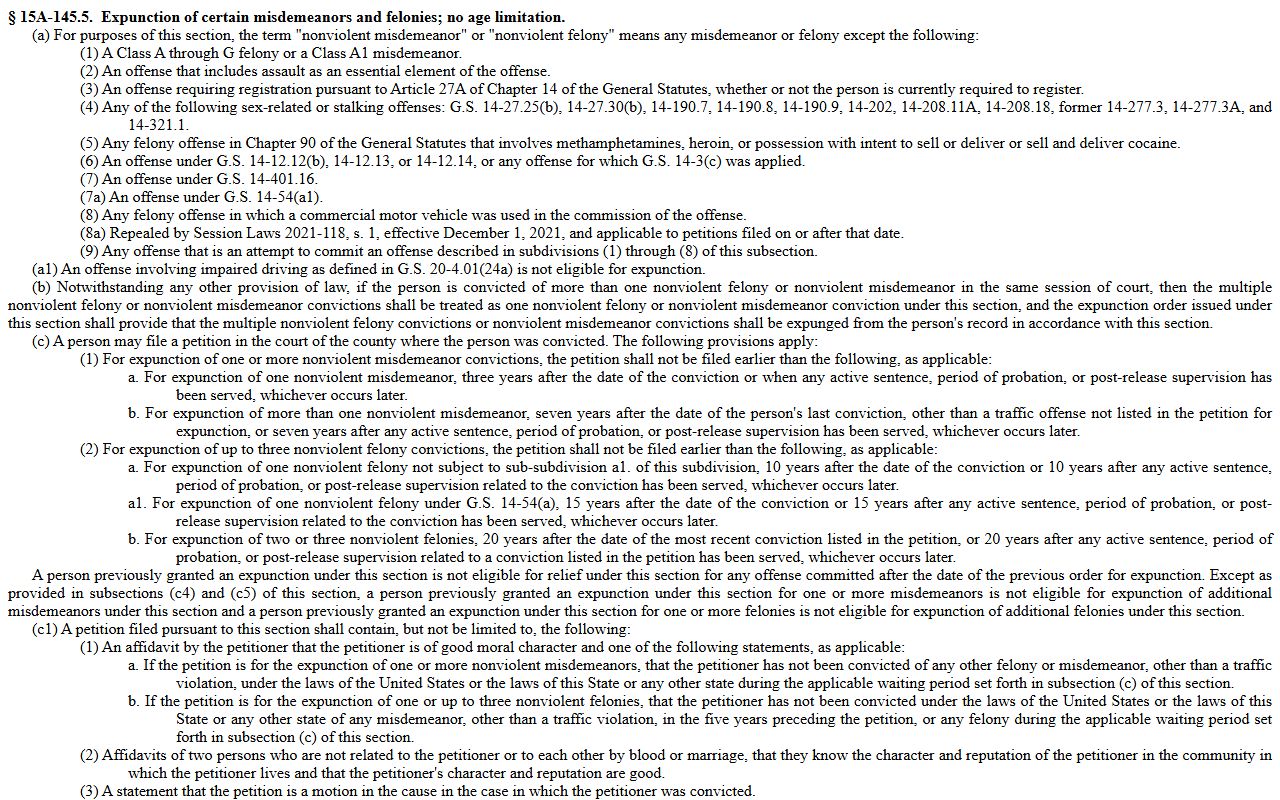
The statute screenshot supports the expunction discussion because some dispositions and convictions are treated differently under North Carolina law.
District Attorney Role
Lee County is in Prosecutorial District 12, which includes Harnett and Lee Counties. The official Conference of District Attorneys page identifies Suzanne Matthews as District Attorney for the Twelfth Prosecutorial District. The District Attorney represents the State in criminal cases and infractions. That office is relevant to charging decisions, reductions, dismissals, plea negotiations, victim services, and subpoenas, but it is not the public custodian of the full court file.
The Prosecutorial District 12 source page is the official image source for the District Attorney reference below.
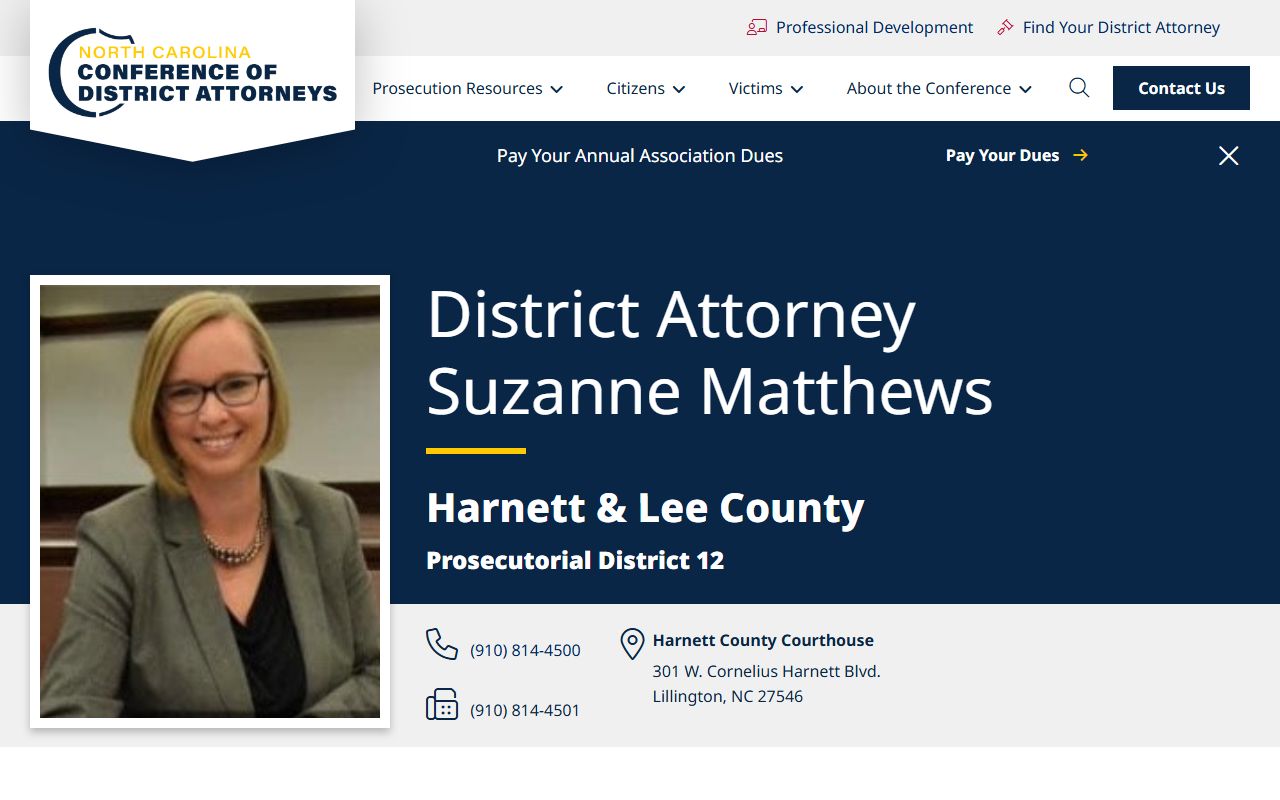
When a Lee County charge is reduced, dismissed, or resolved by plea, the public court record may show the result while the prosecution decision itself remains part of the case process.
Sealed vs Expunged Records
North Carolina recognizes several routes that can limit public criminal-record access. A sealed record may remain in existence but be hidden from public view by statute or court order. An expunction can seal or destroy state records of a qualifying arrest, charge, or conviction as ordered. Eligibility depends on the offense, age, disposition, conviction history, waiting period, and required findings. Impaired driving, violent offenses, sex-registration offenses, and many other categories may be excluded.
| Sealed | Expunged | |
|---|---|---|
| Public visibility | Hidden or limited by court order or statute. | Removed from ordinary public access after a qualifying order. |
| Record treatment | The court or agency may still keep the record under restricted access. | State records may be sealed or destroyed as the expunction order directs. |
| Lee County process | Handled through the court file and any sealing order. | Petition is filed in the county of conviction and served on the district attorney. |
| Limits | Juvenile, mental health, adoption, and safety-related records have separate restrictions. | Waiting periods and offense exclusions apply under North Carolina expunction law. |
The North Carolina Indigent Defense Services directory is relevant when a defendant needs counsel and no Lee County-specific public defender office was confirmed in the research.
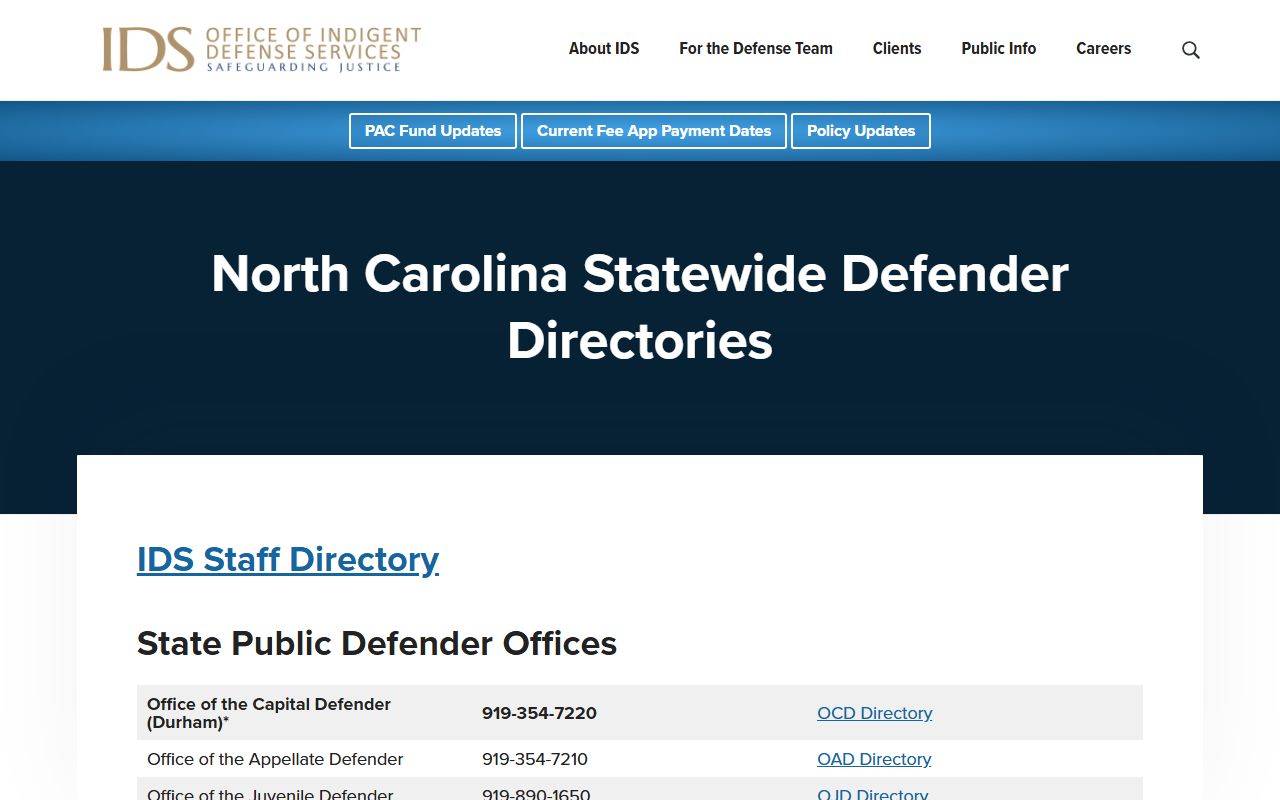
For a defendant who cannot afford counsel, the verified route is to ask the court about appointed counsel or indigency through the court process.
Public Access to Criminal Records
North Carolina law makes many clerk-maintained court records open during regular office hours unless another law blocks access. The public-access rule is broad, but it does not turn police investigation files, sealed records, juvenile cases, expunged records, adoption files, mental health records, or personal identifiers into ordinary public records. For Lee County criminal court records, the safest access path is Portal for public case information and the Clerk of Superior Court for paper files, copies, certified records, and background-check use.
Key Statutes:
N.C.G.S. 7A-109 requires clerk-maintained records, files, dockets, and indexes to be open unless prohibited by law.
N.C.G.S. 132-1.4 treats criminal investigation records differently while recognizing public access for certain returned criminal process.
N.C.G.S. 132-1.10 protects social security numbers and other personal identifying information.
Federal Criminal Records
Lee County is in the Middle District of North Carolina for federal court. Federal criminal cases are not searched through NC eCourts Portal or the Lee County Clerk of Superior Court. Use federal court sources, PACER, and the proper federal district office for federal case files. The U.S. Attorney Middle District information page lists Lee County in the district.
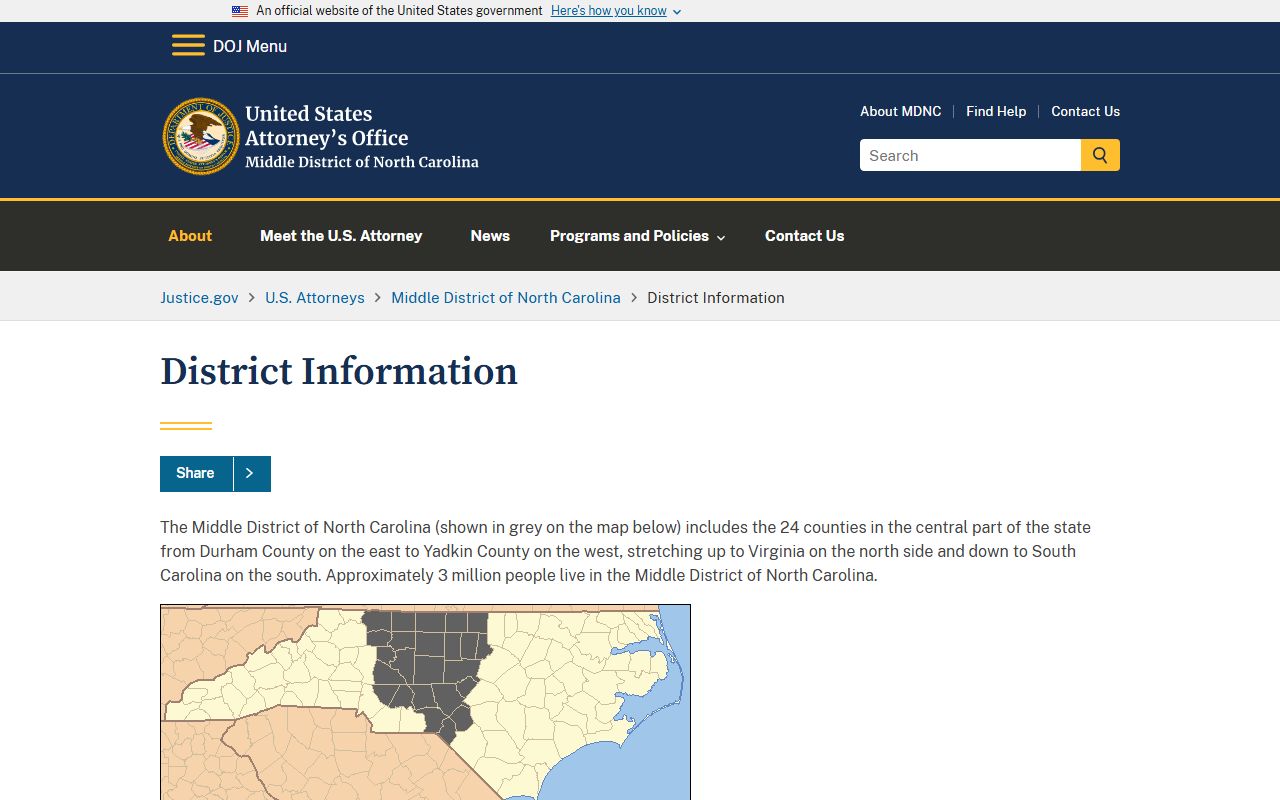
This distinction prevents a common search error: a federal prosecution may involve a Lee County resident or event, but the case file is maintained in the federal system.
Important: This privately operated resource is not a consumer reporting agency and may not be used for FCRA-regulated screening.