
How to Search Lee County Court Records
The main online search channel for Lee County court records is the NC eCourts Portal. The Lee County Judicial Branch page points users to Portal for searches by name, citation number, county, and more. Portal supports Smart Search for case information, hearing search for court dates, payment access for eligible criminal, infraction, probation, and parole matters, and NC Judgment Search for judgment indexes. Lee County was one of the first North Carolina counties to use eCourts, with the pilot launch on February 13, 2023.
Use the most exact identifier first. A record number, case number, or citation number is stronger than a name search. If only a name is available, filter by Lee County, add a file-date range when possible, and check spelling carefully. Portal requires JavaScript, cookies, browser support, and periodic CAPTCHA checks. Registration is available for added user features, but a basic public search can be run without a paid federal-style account.
The official North Carolina Judicial Branch Lee County page is the first manifest image source for Lee County court records.
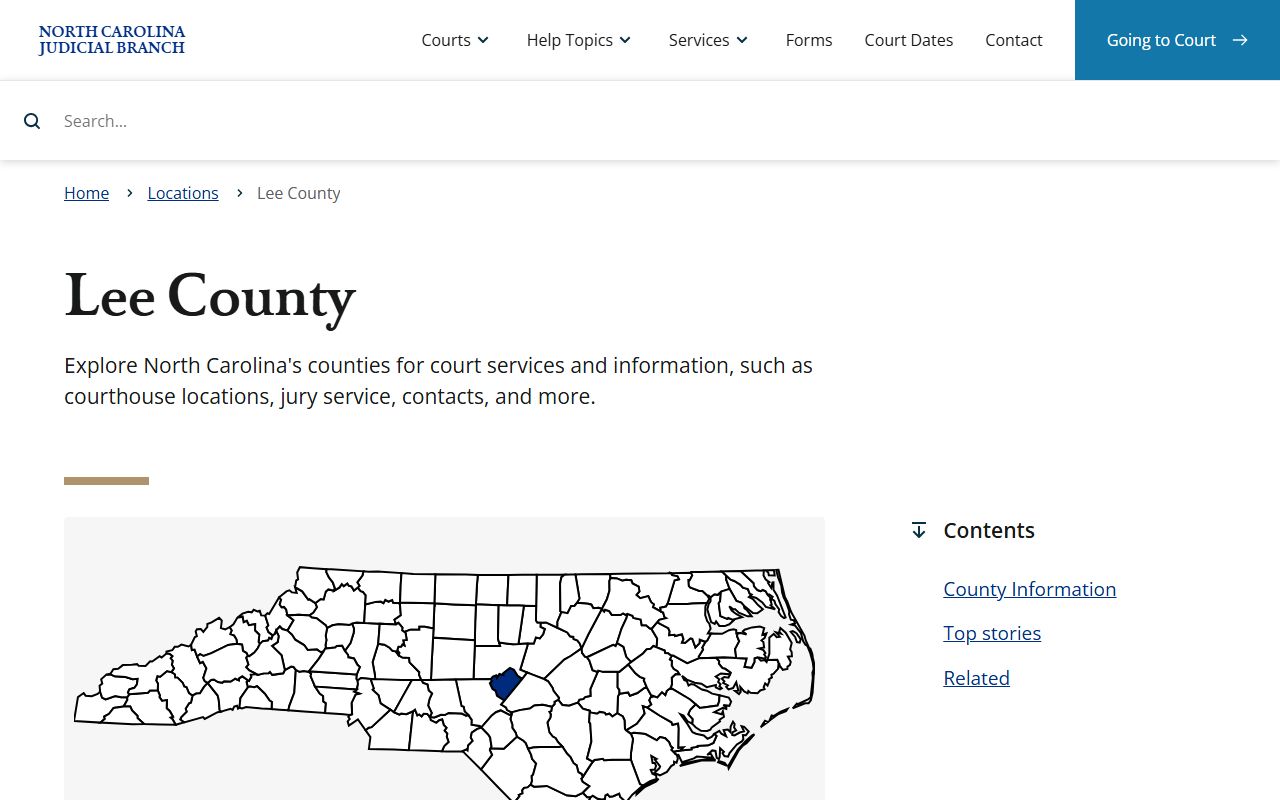
That county page ties together Portal search links, local services, court dates, payments, forms, and Lee County court contacts.
- Open the NC eCourts Portal and choose Smart Search for a case search or hearing search for a court-date lookup.
- Enter a record number, case number, citation number, or party name using Portal's name-format instructions.
- Open Advanced Filtering Options and select Lee County when filtering by location.
- Review case status, docket entries, hearing dates, judgments, liens, and any public documents shown.
- Contact the Clerk of Superior Court for paper files, certified copies, older records, or background-check requests.
Lee County Courthouse Basics
The main courthouse for Lee County court records is the Lee County Courthouse at 1400 S Horner Blvd, Sanford, NC 27330. The North Carolina Judicial Branch lists the courthouse mailing address as PO Box 4209, Sanford, NC 27331, and the main phone number as (919) 718-6300. The courthouse is open Monday through Friday from 8:00 AM to 5:00 PM. Public parking is listed off Courtland Drive or Elm Street. The official building notes identify wheelchair access and vending machines.
The same courthouse houses the Clerk of Superior Court, courtrooms for Superior Court and District Court matters, magistrate-related contacts, court records access, and traffic payment or citation services. The contact directory routes users to specific court offices, including the Clerk of Superior Court, judges, district attorney, magistrates, custody mediation, juvenile services, Guardian ad Litem, and several division email contacts. Because some email text is masked in static extraction, the official directory is the better source for current division routing.
The manifest image for this section comes from the official Lee County Courthouse page.
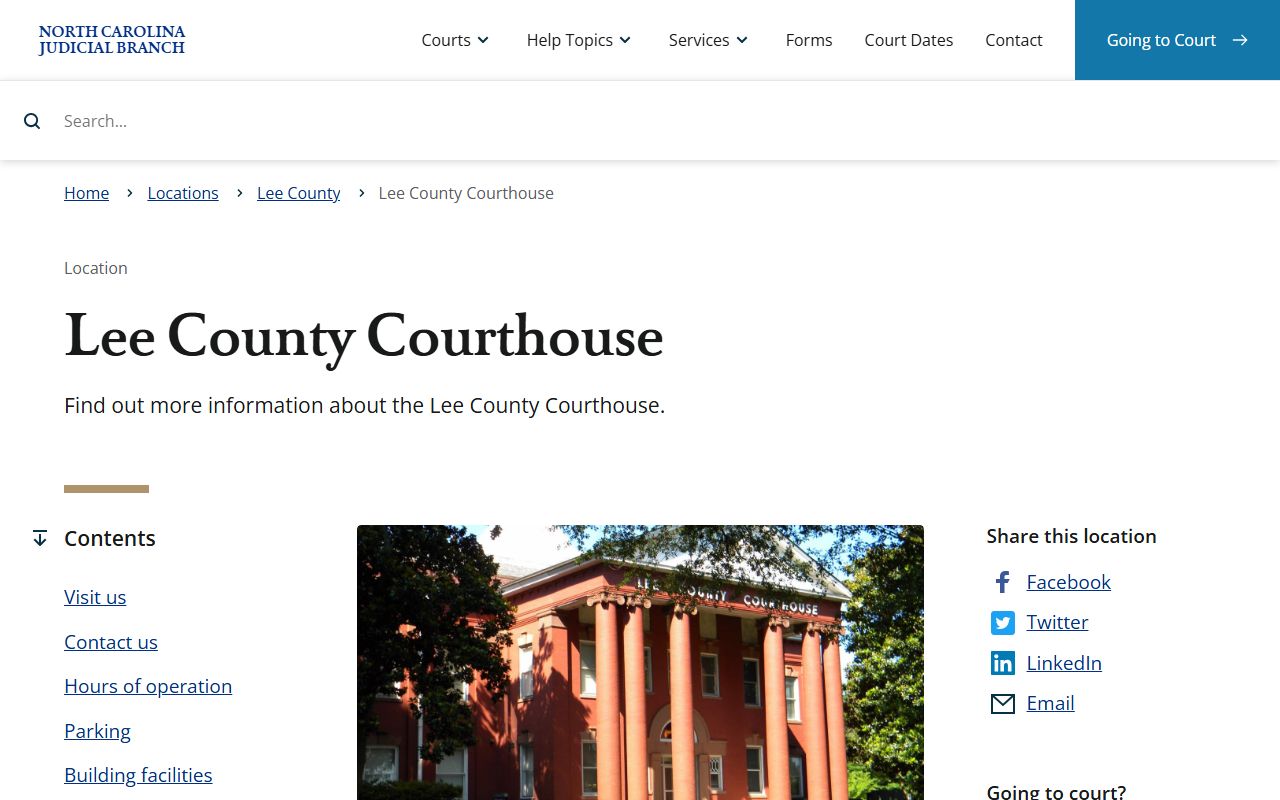
The courthouse page is the source for address, hours, parking, accessibility, mailing, and facility details used in Lee County court records access planning.
Lee County Courthouse
1400 S Horner Blvd
Sanford, NC 27330
(919) 718-6300
Monday-Friday, 8:00 AM-5:00 PM
Clerk of Superior Court
Lee County Courthouse
PO Box 4209, Sanford, NC 27331
(919) 718-6300
Lee County Court System
North Carolina uses one statewide court system rather than separate county or municipal courts for ordinary state matters. Lee County is listed in Prosecutorial District 12, Superior Court District 12, and District Court District 12. Superior Court is the general jurisdiction trial court. It handles felonies, civil cases over $25,000, and appeals from District Court misdemeanor or infraction matters. District Court handles misdemeanors, infractions, juvenile cases, divorce, custody, support, civil cases under $25,000, and magistrate matters.
Magistrates can issue arrest warrants, set bail, accept certain minor guilty pleas, and hear small claims or landlord-tenant matters. The Clerk of Superior Court keeps records for both Superior Court and District Court and also acts as probate judge for estates. Appeals usually move from trial courts to the North Carolina Court of Appeals and then, in some cases, to the Supreme Court of North Carolina.
| Court or Office | Lee County Role | Records or Case Types |
|---|---|---|
| Superior Court | Superior Court District 12 | Felonies, higher-value civil cases, District Court appeals. |
| District Court | District Court District 12 | Misdemeanors, infractions, family, juvenile, and lower-value civil cases. |
| Magistrates | Lee County court contacts | Warrants, bail, small claims, evictions, and certain minor pleas. |
| Clerk of Superior Court | Unified court record office | Trial-court files, estates, special proceedings, judgments, liens, indexes. |
| Register of Deeds | Separate county records office | Marriage records, vital records, deeds, plats, and recorded instruments. |
Which Office Holds Lee County Records
A Lee County record search works best after sorting the record by custodian. Court case files, dockets, judgments, estates, and special proceedings belong with the Clerk of Superior Court. Marriage licenses, marriage certificates, birth certificates, death certificates, deeds, deeds of trust, plats, assumed names, powers of attorney, military discharges, and notary records belong with the Register of Deeds. Jail custody and inmate grid information belong with the Sheriff's Office and Lee County Detention Facility. State prison, probation, and parole status belongs with the North Carolina Department of Adult Correction.
This split is important because Portal is not a universal county database. A divorce judgment is a court record, but a marriage certificate is a Register of Deeds record. A traffic citation is a court record, but a driver-history record is a DMV record. A criminal charge may appear in a court case, while a law-enforcement investigation file can be limited by criminal investigation rules. If the wrong office is contacted, the search often stalls even when the record exists.
Lee County's official court contact directory is one of the index manifest sources.
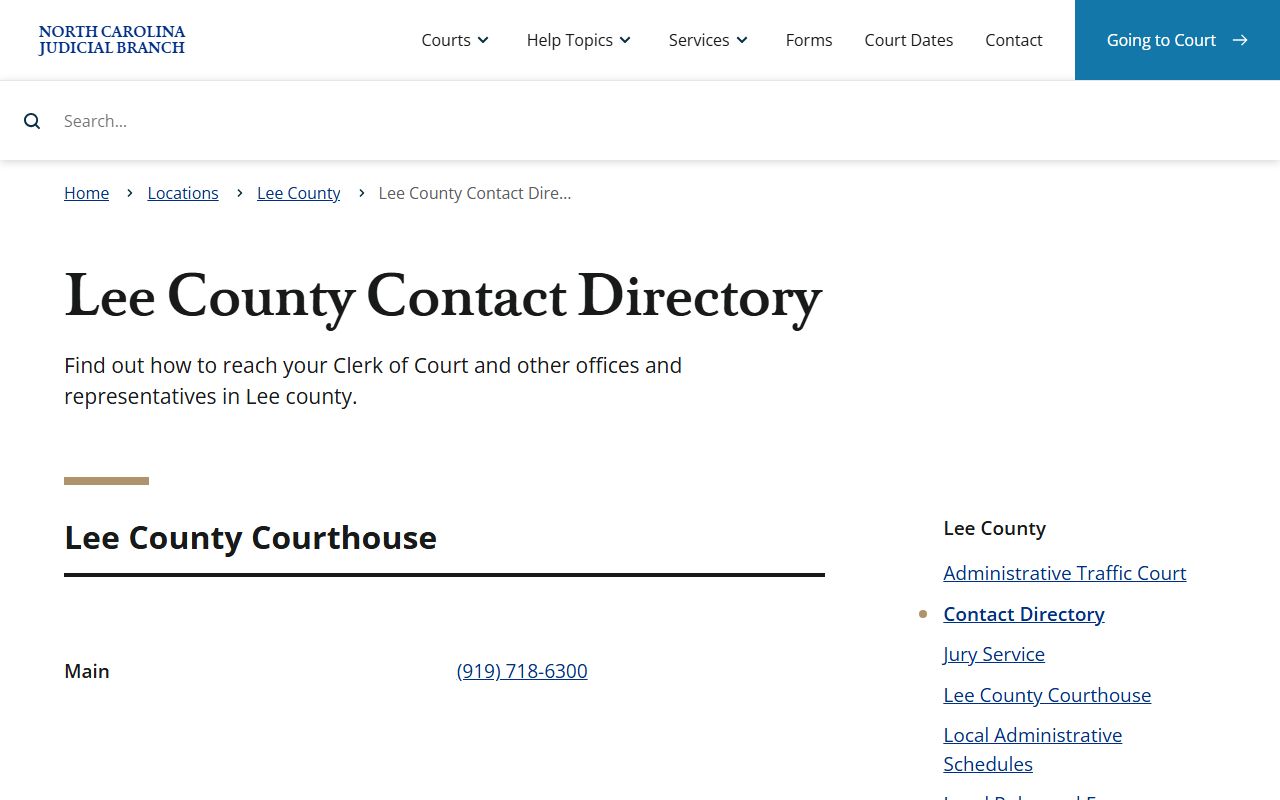
The directory is especially useful when a Lee County court records user needs the clerk, magistrate, district attorney, judge, or court division contact rather than a general county office.
Types of Lee County Court Records
Lee County court records include civil, criminal, family, traffic, probate, special proceeding, judgment, lien, and magistrate-related records. Civil files can include complaints, answers, motions, notices, orders, judgments, liens, lis pendens, foreclosures, partitions, condemnations, and related docket entries. Criminal files can include warrants, summonses, magistrate orders, charging papers, indictments, appearances, bond information, pleas, dispositions, sentencing orders, probation conditions, appeals, fines, costs, and restitution.
Family records include divorce, custody, support, equitable distribution, and domestic violence protective orders. Estate records include wills, letters testamentary, letters of administration, inventories, accountings, small estates, summary administration, year's allowance, guardianships, and special proceedings. Traffic and infraction records show citation numbers, offenses, court dates, dispositions, costs, fines, waivers, reductions, dismissals, or contested settings. Juvenile and mental health matters are court records too, but public access is restricted.
| Record Type | Primary Lee County Source | Access Note |
|---|---|---|
| Civil cases | Clerk of Superior Court and Portal | Search by party, case number, file date, or case type where available. |
| Criminal cases | Clerk of Superior Court and Portal | District Court handles misdemeanors and infractions; Superior Court handles felonies. |
| Traffic citations | Portal, Citation Services, and clerk | Waivable cases may be paid or handled online, in person, or by mail. |
| Estates and probate | Clerk of Superior Court | The clerk acts as probate judge for estate administration. |
| Marriage certificates | Register of Deeds | Not a Clerk of Superior Court record. |
What Lee County Court Records Show
Common Lee County court record fields include case number, party names, filing date, case type, case status, court location, docket entries, hearing information, judgments, liens, dispositions, and financial fields. A criminal file may also show offense details, bond, pleas, sentence, probation, restitution, and appeal information. A civil file may show claims, motions, orders, judgment terms, liens, and parties. A family file may show divorce, custody, support, or protective-order events, but sensitive details may be redacted or unavailable.
Several terms appear often. A plaintiff starts a civil lawsuit. A defendant is sued in civil court or charged in criminal court. A motion asks the court for a ruling. An order is a judge's directive. A judgment is the court's final or enforceable decision. A disposition is the outcome of a case or charge. A docket is the chronological list of filings, settings, and court actions. An expunction is a legal process that seals or destroys qualifying records.
- Docket
- The timeline of filings, hearings, settings, orders, and other court actions.
- Disposition
- The outcome of a case or charge, such as dismissed, guilty, not guilty, responsible, or judgment entered.
- Special proceeding
- A statutory clerk proceeding often tied to estates, guardianships, partitions, or similar matters.
- Expunction
- A court process that removes a qualifying arrest, charge, or conviction from ordinary public access.
Lee County Court Records Access Laws
North Carolina court records are governed by court-specific law as well as general public-records rules. N.C.G.S. 7A-109 requires clerks to maintain records, files, dockets, and indexes and makes them open for public inspection during regular office hours unless another law prohibits access. Chapter 132 governs many agency records, but it does not turn every court, law-enforcement, vital, or juvenile record into a freely available file.
Criminal investigation records are handled differently under N.C.G.S. 132-1.4. Returned warrants and certain criminal process records may become public court records unless sealed, while investigative files may remain limited. N.C.G.S. 132-1.10 protects social security numbers and personal identifiers. N.C.G.S. 7B-3000 limits juvenile record access. These rules explain why one Lee County record may be searchable online while another must be requested in person or is not public.
Key access point: Portal is the first public search tool, but the Clerk of Superior Court remains the official source for paper files, certified copies, and background-check routing.
Restricted Lee County Court Records
Restricted court records include juvenile delinquency, abuse, neglect, dependency, and undisciplined matters; sealed records; expunged records; adoption files; mental health proceedings; and personal identifiers such as social security numbers or financial account data. Domestic violence protective order matters may be public civil proceedings, but victim addresses, minors, and safety-related details can require redaction. A public search may show only a limited docket entry or may show no result when a matter is sealed or confidential.
Expunctions follow specific North Carolina statutes. Some nonviolent misdemeanors or felonies may be eligible after waiting periods and required findings, but many offense categories are excluded. The petition is filed in the county of conviction, served on the district attorney, and may require affidavits, record checks, victim notice, and judicial findings. No Lee County page should promise expunction eligibility from a search result alone because the final answer depends on the offense, age, history, disposition, and statute.
Lee County Sheriff and Jail Records
The Lee County Sheriff's Office is led by Sheriff Brian Estes. The official sheriff page lists the main phone as (919) 718-4560 and a crime tip line at (919) 718-4577. The Lee County Detention Facility is at 1401 Elm Street in Sanford. Jail records are separate from court files, but they can help confirm current or recent custody when a criminal case is active. The detention search has Current and Released modes, name and charge searches, a days search, and public grid fields such as full name, age, race, sex, and admit date.
Jail court-date information has limits. The detention page says Superior Court dates will not be shown because the inmate must appear before a Superior Court judge when called. It also says court dates update within 48 business hours after the detention facility receives them from the courts. For active case dates, Portal and the clerk are better court sources. For custody, release, bond, mail, phone, video visits, Pay Tel, and deposit rules, use the jail and sheriff channels.
The manifest includes Lee County's official Lee County NC Linked mobile app page.
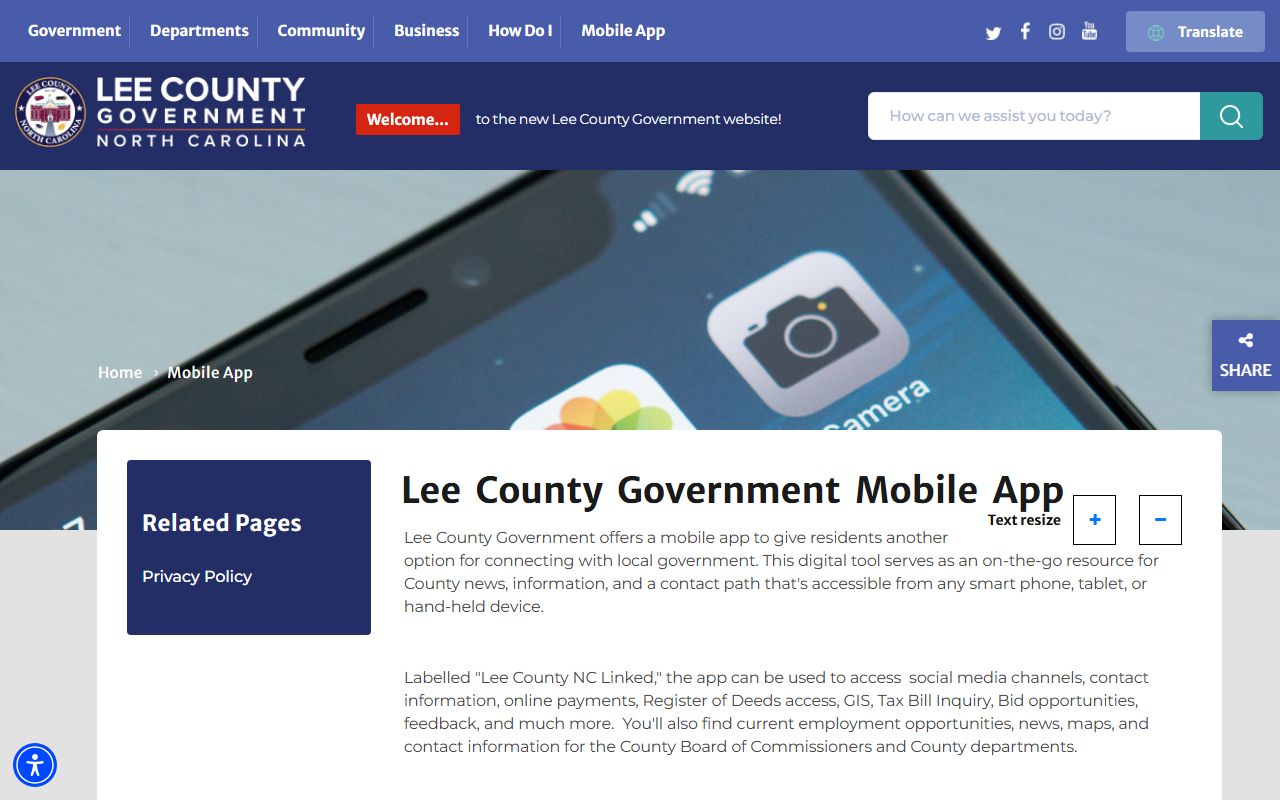
The app is a county government app with contacts, payments, Register of Deeds access, GIS, tax inquiry, news, maps, and department information, but no app-only inmate or warrant search was confirmed.
Lee County Traffic Court Records
Traffic cases in Lee County are handled through North Carolina District Court and Administrative Traffic Court, also called Disposition Court. The official Lee County page says Administrative Traffic Court runs from 9:00 AM to 4:00 PM on the scheduled court date. A person may appear any time during that window or retain a lawyer to appear. It is not the trial court, and the officer who issued the citation will not be present on that date. Some traffic tickets can be resolved without appearing.
Traffic records can be searched through Portal or citation services by citation number, name, county or location, and case or record number. If paying by mail, Lee County payment instructions require a money order or certified check payable to Lee County Clerk of Superior Court, with the citation number included. Cash and personal checks are not accepted by mail. Online card payments accept Visa, MasterCard, and Discover, while digital wallet apps such as Apple Pay, Google Pay, Cash App, and Venmo are not accepted.
Lee County Criminal Case Offices
Lee County is in Prosecutorial District 12, which includes Harnett and Lee Counties. The official Conference of District Attorneys page identifies Suzanne Matthews as the District Attorney for the Twelfth Prosecutorial District. The district attorney represents the State of North Carolina in criminal cases and infractions, so the office is relevant to charging decisions, reductions, dismissals, plea negotiations, victim services, subpoenas, and prosecution. The court contact directory lists the Lee County District Attorney phone as (919) 718-6310.
The district attorney is not the clerk and is not the custodian of the full court file. Public case records still route through Portal and the Clerk of Superior Court. No Lee County-specific public defender office was confirmed in the statewide Indigent Defense Services directory excerpt inspected. A defendant who cannot afford counsel should ask the court about court-appointed counsel or indigency through the first appearance, clerk, or court process rather than relying on an unverified local public defender listing.
Marriage Divorce and Probate Records
Marriage records in Lee County are handled by the Register of Deeds, not the Clerk of Superior Court. The Register of Deeds office is at 1300 South Horner Blvd in Sanford, with phone (919) 718-4585 and Monday-Friday hours from 8:00 AM to 5:00 PM. The official county page says marriage licenses are by appointment only. Certified marriage certificates through the Permitium portal are $10 each, with an added non-refundable $4 service and credit-card processing fee for online orders and a $1 Vital Verify fee for delivery orders.
Divorce judgments are different. They are court records from the clerk in the county where the divorce was granted. A person searching a Lee County divorce case should use Portal first, then contact the Clerk of Superior Court for certified copies or paper-file access. Probate records also belong with the Clerk of Superior Court, because the clerk acts as ex officio Judge of Probate for estates. Probate can include wills, letters testamentary, letters of administration, inventories, accountings, small estate filings, summary administration, year's allowance, guardianship-related special proceedings, and related estate records.
Lee County Public Records Requests
Lee County has a county public-record request process for county-held records, but court users should keep the custodian split clear. Court files are governed by court-record rules and the Clerk of Superior Court's duties. Sheriff's Office or county records may route through county or agency request channels. Register of Deeds records route through the ROD office or its online records tools. A request sent to the wrong custodian may be redirected or delayed.
The index manifest includes the official Lee County public records request page.
Use the county request path for county-held records, while Lee County court records should be searched through Portal or requested from the Clerk of Superior Court.
Lee County Federal Court Records
Federal court records are separate from Lee County and North Carolina court records. Lee County is in the U.S. District Court for the Middle District of North Carolina, and the U.S. Attorney's Office Middle District information page lists Lee County among the district counties. Federal civil, criminal, and bankruptcy cases are searched through federal court systems such as PACER and CM/ECF, not NC eCourts Portal. The federal district has offices in Greensboro, Winston-Salem, and Durham, but no federal courthouse in Lee County was identified in the official sources inspected.
The manifest includes the U.S. District Court for the Middle District of North Carolina homepage.
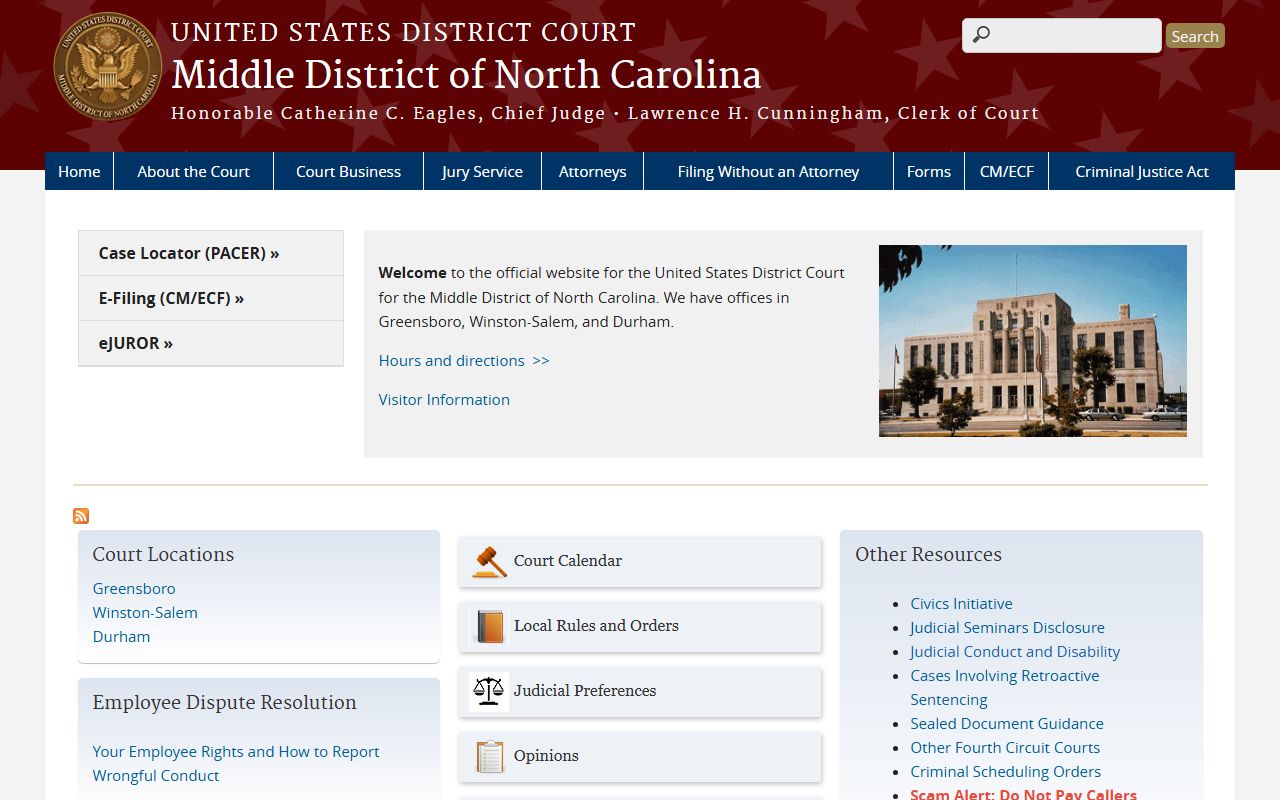
That federal source helps separate state court records at the Lee County courthouse from federal cases filed in the Middle District of North Carolina.
Lee County eCourts Updates
Lee County has a special place in the statewide digital record rollout because it was part of the first eCourts pilot group with Harnett, Johnston, and Wake Counties. The February 13, 2023 launch included eFiling, Portal, and Odyssey. That means Lee County users have used the statewide digital court-record system longer than many North Carolina counties. By October 13, 2025, the Judicial Branch announced that eCourts was available across all 100 North Carolina counties with electronic filing and online court-record search.
Recent eCourts litigation and reporting also show why official verification matters. Research noted a May 2024 Associated Press report about claims that eCourts errors contributed to unlawful arrests or extended detentions. The report said claims against several officials, including Lee County Sheriff Brian Estes, were voluntarily dismissed while claims remained against others and Tyler Technologies. That context does not change the official access path, but it supports checking urgent warrant, custody, and hearing details with the clerk, magistrate, sheriff, or counsel.
Lee County Local Court Context
Lee County was established in 1907 from portions of Moore and Chatham Counties and is North Carolina's 98th county. The county seat is Sanford, named for railroad engineer Col. Charles Ogburn Sanford. The county's official history ties the creation of Lee County to access to government and court services. Before 1907, residents near Sanford traveled to older county seats such as Carthage in Moore County, and official history describes that wagon and buggy travel through the sands from Sanford to Carthage was slow and difficult.
Sanford's growth came from railroad crossings, coal movement from the Egypt and Cumnock area, and later local industries. Lee County's justice offices now form a practical Horner and Elm Street cluster: the courthouse is at 1400 S Horner Blvd, the Register of Deeds is at 1300 South Horner Blvd, the detention facility is at 1401 Elm Street, and jail legal mail uses 1408 South Horner Blvd. Those offices are near each other, but they do not hold the same records.
The manifest includes the official Lee County history page.
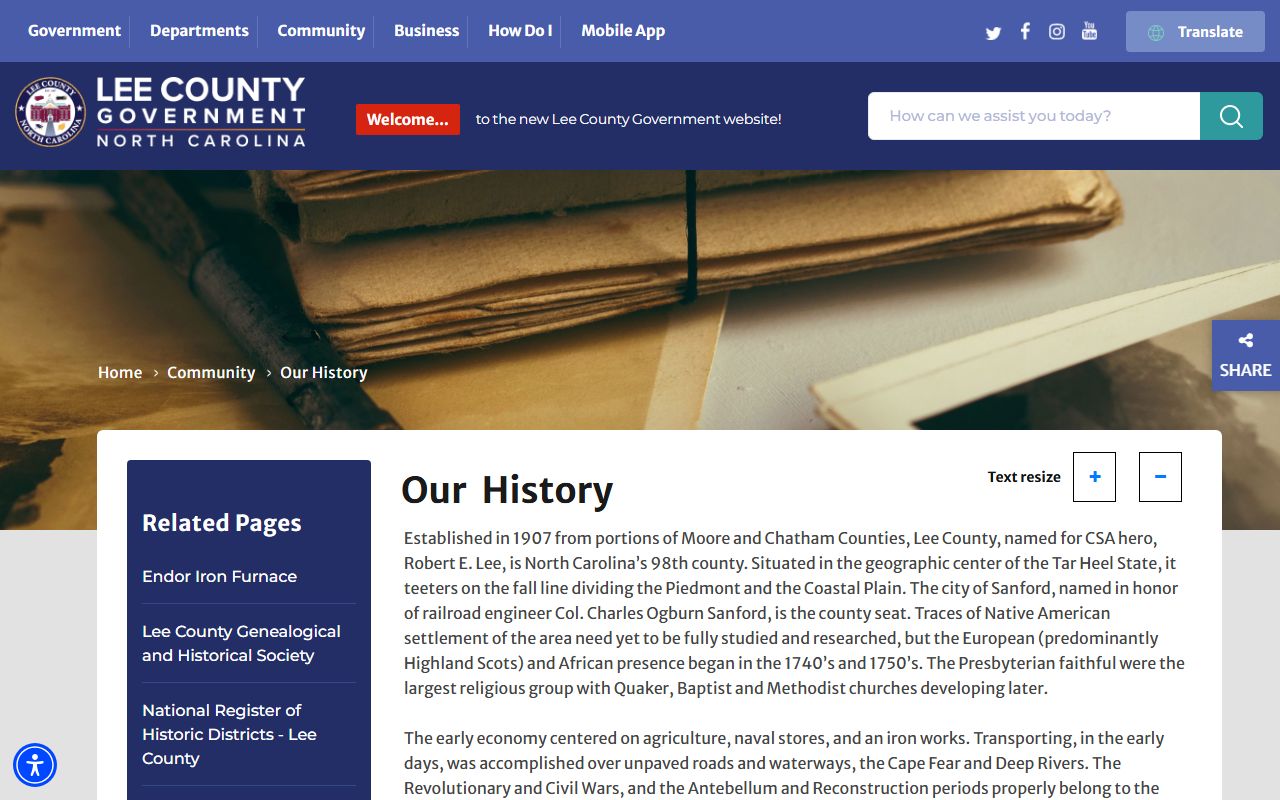
The history source explains why Sanford became the county seat and why local access to government offices has long been central to Lee County.
Lee County Records and Growth
Official Census QuickFacts listed Lee County's July 1, 2025 estimated population as 70,258 and the April 1, 2020 Census population as 63,285. Growth matters for court-record searches because statewide Portal searches can return many similar names, old cases may still require paper-file review, and users may need to search across counties when a person has lived or filed cases outside Lee County. Population growth also affects traffic, family, civil, landlord-tenant, and small claims volume over time.
Lee County sits near the geographic center of North Carolina, on the fall line between the Piedmont and Coastal Plain. Major routes converge through Sanford and the courthouse area, which helps explain the practical importance of clear directions, parking notes, courthouse hours, and office routing. Public parking is officially listed off Courtland Drive or Elm Street, while COLTS is the county public transportation provider. No route-specific courthouse stop was confirmed in the extracted source material.
The index manifest includes official U.S. Census QuickFacts for Lee County.
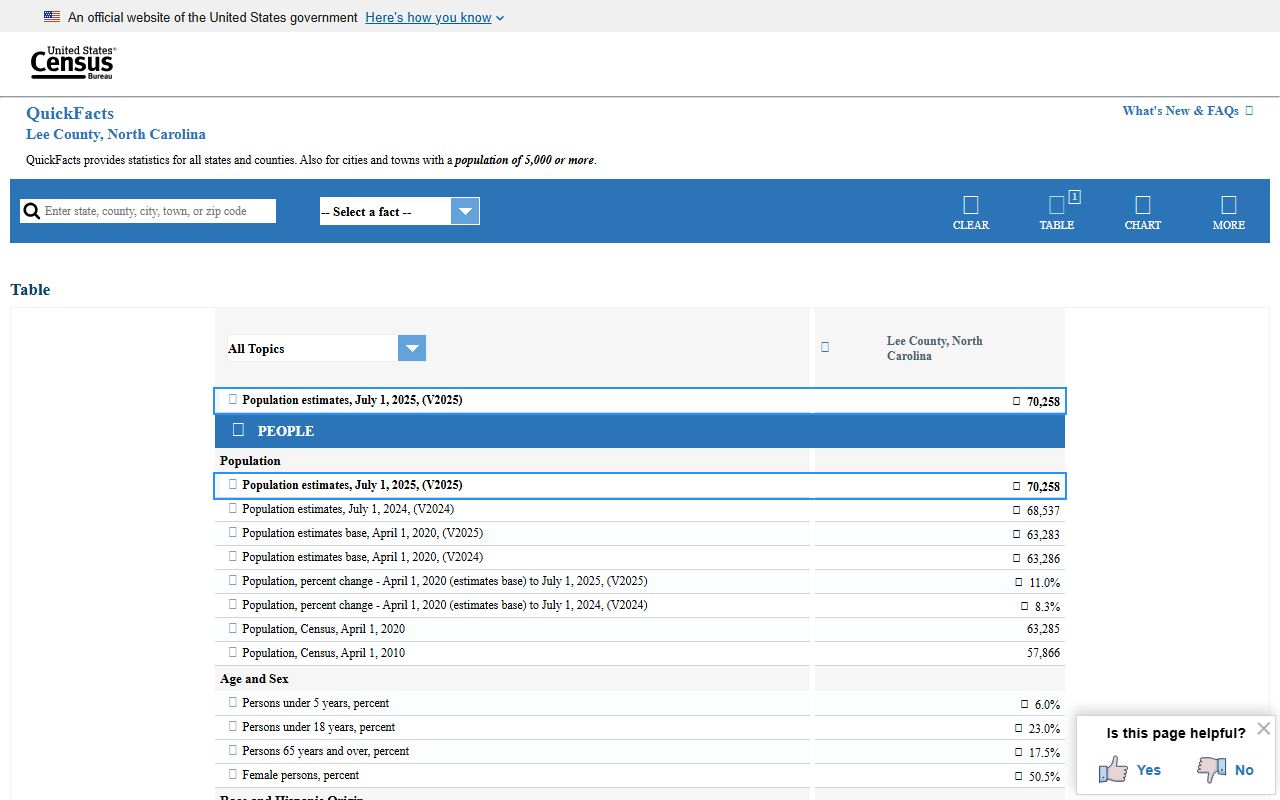
Census data gives context for Lee County's growth, but it does not replace official court, clerk, jail, or Register of Deeds records.
Lee County Court Records FAQ
Where does a Lee County court records search start?
Most searches start in the NC eCourts Portal with Smart Search or hearing search. Use the Clerk of Superior Court for paper files, certified copies, background checks, older records, or records that do not display online.
Are Lee County court records the same as public records requests?
No. Court records are maintained by the Clerk of Superior Court under court-record rules. County public-record requests are useful for county-held records, but a court case file belongs with the clerk.
Who holds Lee County marriage records?
The Register of Deeds holds marriage licenses and marriage certificates. Divorce judgments are court records and come from the clerk in the county where the divorce was granted.
Can a Lee County court date change?
Yes. Portal and official notices should be checked carefully. Jail custody pages may lag behind court updates, and Superior Court dates may not display in jail records.