
Lee County Superior Court Role
Lee County is listed by the North Carolina Judicial Branch in Superior Court District 12, District Court District 12, and Prosecutorial District 12. North Carolina has one unified statewide court system rather than separate municipal or county court systems for ordinary state court cases. The court system is organized into the Appellate Division, Superior Court Division, and District Court Division.
Superior Court is the general jurisdiction trial court. It handles felony criminal cases, civil cases over $25,000, and misdemeanor or infraction appeals from District Court. In Lee County, Superior Court records are kept by the Clerk of Superior Court at the Lee County Courthouse, not by a separate county clerk. Court users may search online through Portal, use public terminals, or request paper-file access from the clerk.
Lee County Superior Court District
The research did not identify multiple numbered Superior Courts in Lee County. It identifies the county within Superior Court District 12 and gives the local courthouse and court contact structure. Because North Carolina uses statewide trial-court divisions rather than county-created numbered courts, the required court table is best presented as the local Lee County court and office routing table.
| Court or Office | Type | Address | Phone |
|---|---|---|---|
| Lee County Courthouse | Superior Court, District Court, Clerk | 1400 S Horner Blvd, Sanford, NC 27330 | (919) 718-6300 |
| Superior Court Judges | Superior Court District 12 | Lee County / District 12 | (910) 814-4488 |
| District Court Judges | District Court District 12 | Lee County / District 12 | (919) 209-5452 |
| Clerk of Superior Court | Records and probate | Lee County Courthouse, PO Box 4209, Sanford, NC 27331 | (919) 718-6300 |
| Magistrates | Lower court officers | Lee County courthouse contact directory | (919) 718-6319 |
| District Attorney | Prosecutorial District 12 | Harnett and Lee Counties | (919) 718-6310 |
Lee County Court Hierarchy
The hierarchy matters because a case may start in one division and move to another. A traffic infraction, misdemeanor, small claim, eviction, custody case, or divorce is usually a District Court matter. A felony or high-value civil case is a Superior Court matter. Magistrates can issue arrest warrants, set bail, accept certain minor pleas, and hear small claims or landlord-tenant cases. Appeals generally move from trial courts to the North Carolina Court of Appeals and then, in selected cases, to the Supreme Court of North Carolina.
| Level | Court or Office | Lee County Role | Jurisdiction |
|---|---|---|---|
| Highest appellate | Supreme Court of North Carolina | Statewide | Final state appellate court in selected appeals and discretionary review. |
| Intermediate appellate | North Carolina Court of Appeals | Statewide | Main intermediate appellate court for trial-court appeals. |
| General trial court | Superior Court | Superior Court District 12 | Felonies, civil cases over $25,000, and appeals from District Court. |
| Limited trial court | District Court | District Court District 12 | Misdemeanors, infractions, juvenile, divorce, custody, support, and civil cases under $25,000. |
| Magistrate | Magistrates | Lee County contact: (919) 718-6319 | Warrants, bail, small claims up to $10,000, evictions, and certain minor pleas. |
| Clerk and probate | Clerk of Superior Court | Lee County Courthouse | Court records and probate functions. |
Superior Court vs Lower Courts
Lee County does not have separate municipal courts or justice-of-the-peace courts for ordinary North Carolina state court records. The practical comparison is Superior Court, District Court, and magistrates. The same Clerk of Superior Court keeps the records, but the case type determines which division hears the matter and how the case may move.
| Question | Superior Court | District Court | Magistrates |
|---|---|---|---|
| Civil limit | Civil cases over $25,000. | Civil cases under $25,000. | Small claims up to $10,000 and landlord-tenant matters. |
| Criminal role | Felony cases and appeals from District Court. | Misdemeanors, infractions, and many first settings. | Warrants, bail, and certain minor pleas. |
| Family cases | Not the routine family division. | Divorce, custody, and support are District Court matters. | No routine divorce or custody jurisdiction in the research. |
| Record office | Clerk of Superior Court. | Clerk of Superior Court. | Related filings and processes route through court records when filed or returned. |
Lee County Case Movement
Criminal cases can begin with an arrest warrant, criminal summons, citation, or magistrate process. A misdemeanor or infraction usually stays in District Court unless appealed. A felony may begin with arrest and first appearance activity before moving toward indictment or other Superior Court handling. Civil cases under the District Court limit stay in District Court, while higher-value civil cases belong in Superior Court. Estate files start with the Clerk of Superior Court in probate capacity, with contested will caveats potentially heard by a Superior Court judge.
Criminal flow: Charge or arrest › Magistrate or first appearance › District Court settings › Indictment or transfer for felony matters › Superior Court plea or trial › Disposition and sentence › Appeal.
Civil flow: Complaint filed › service and answer › motions or mediation where applicable › trial or judgment › appeal to the proper appellate court.
Note: The Clerk of Superior Court is the records office across the trial divisions, so the division and the record custodian are not the same question.
Search Lee County Superior Records
Superior Court case information can be searched in the NC eCourts Portal. Portal supports Smart Search, hearing search, payments for some cases, and judgment search. The research says Portal can be searched by name, record number, citation number, county, and more. For older cases, paper files, certified copies, or background-check use, contact the Lee County Clerk of Superior Court.
Public self-service terminals in clerk offices can access criminal, civil, special proceeding, and estate case information. The paper file can be viewed at the clerk's office in the county where the case is located unless a law or court order restricts access. Juvenile, sealed, expunged, adoption, mental health, and personal identifying information can be restricted or redacted.
Lee County District Court
District Court remains central to Lee County records even though this page is the Superior Court page under the resolved map. District Court handles misdemeanors, infractions, juvenile matters, divorce, custody, support, civil cases under $25,000, and magistrate matters. Many records a person thinks of as "courthouse records" are District Court records kept by the same Clerk of Superior Court.
Magistrates are also part of the lower court structure. They can issue arrest warrants, set bail, accept guilty pleas for certain minor misdemeanors or infractions, and hear small claims, evictions, recovery of personal property, and mechanics’ lien matters. The Lee County contact directory lists magistrates at (919) 718-6319.
Federal Courts Are Separate
Lee County is in the U.S. District Court for the Middle District of North Carolina, but federal records are separate from Lee County Superior Court records. Federal civil, criminal, and bankruptcy cases use PACER and federal CM/ECF systems. State Superior Court records should be searched through NC eCourts Portal, public terminals, or the Lee County Clerk of Superior Court.
The federal bankruptcy PACER source is shown here: PACER listing for the Middle District of North Carolina Bankruptcy Court.
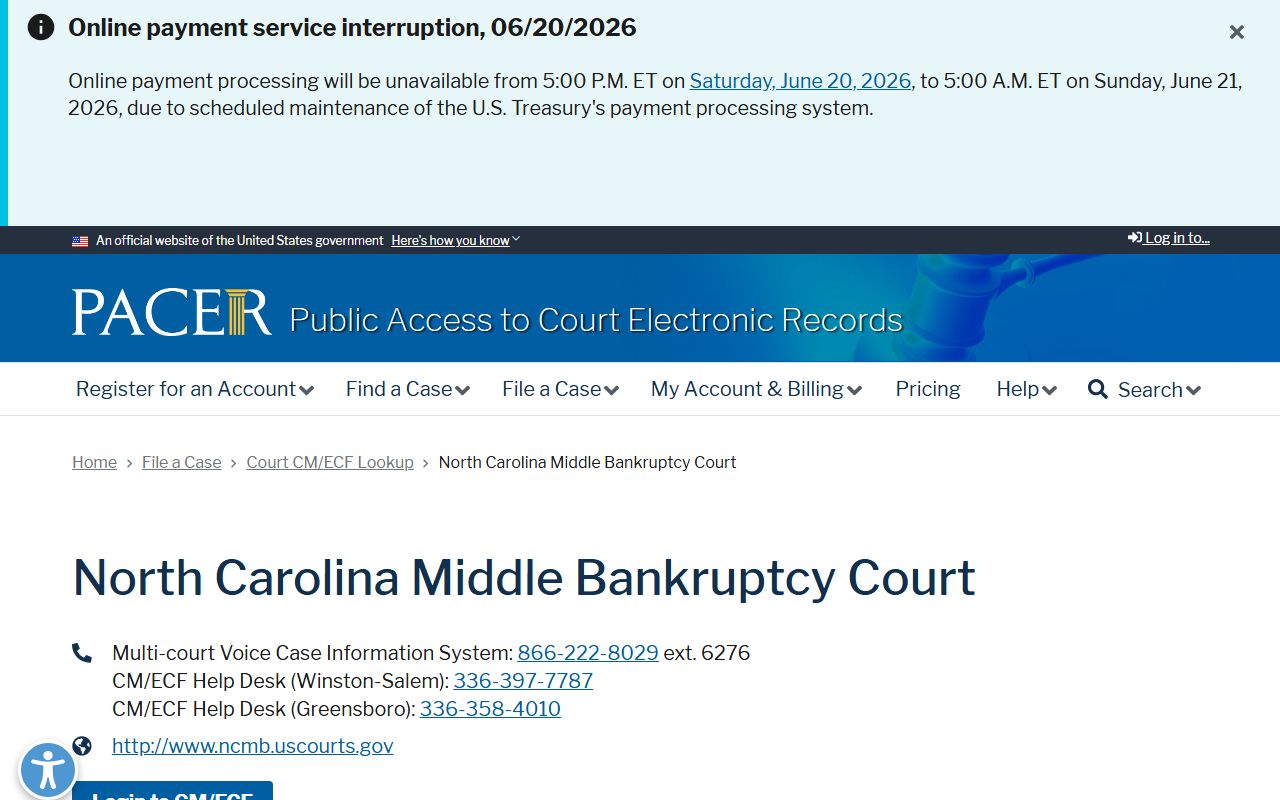
This listing is useful only when a Lee County resident or business has a federal bankruptcy case, not for state Superior Court files.
The federal county-service source is shown here: Middle District of North Carolina counties served page.
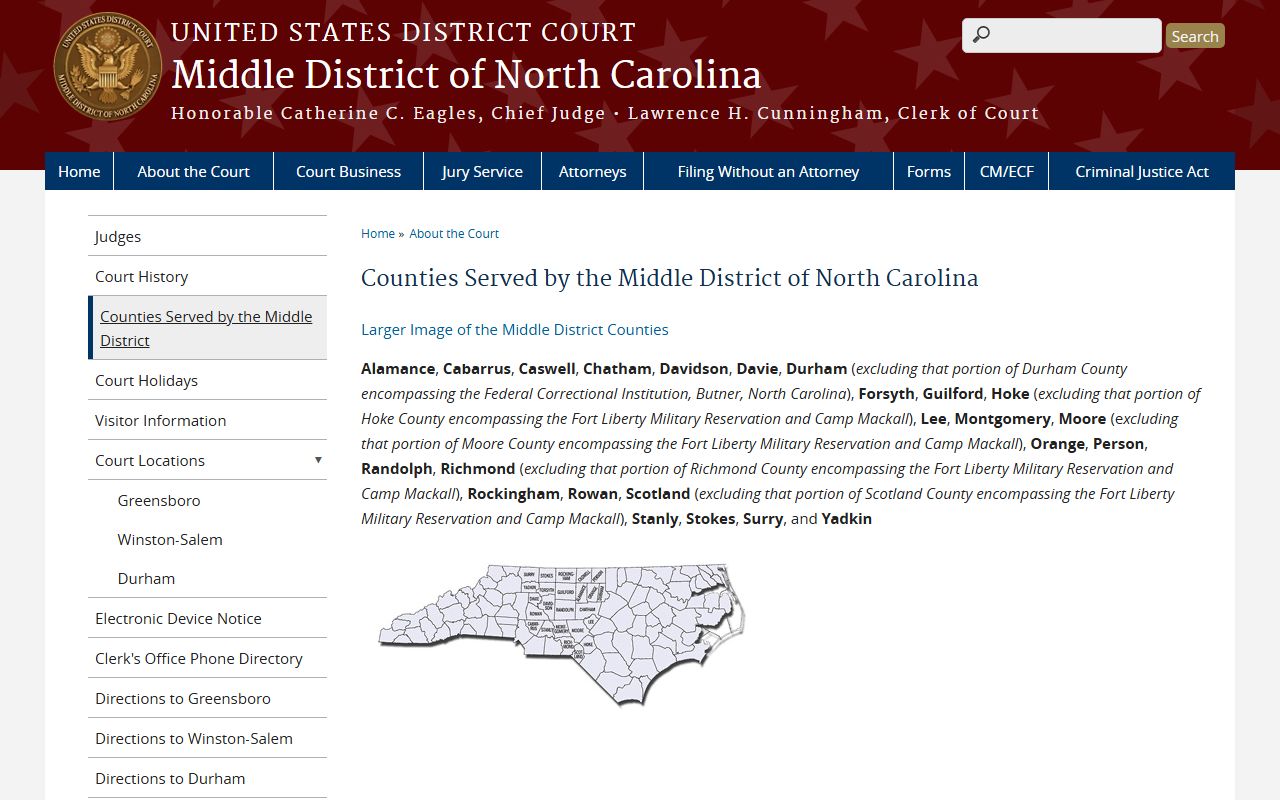
The counties-served page confirms the federal district context while reinforcing that state Superior Court records remain in the North Carolina court system.
State Custody Context
Some Superior Court felony cases can lead to state prison sentences, but prison custody records are not Lee County Superior Court records. The research identifies Sanford Correctional Center in Lee County as a state prison or reentry facility. That facility belongs to the North Carolina Department of Adult Correction, not to the Lee County Clerk of Superior Court. Court records show the case, conviction, sentence, and court orders. Correctional records show custody status and agency supervision.
The state prison source is shown here: Sanford Correctional Center.
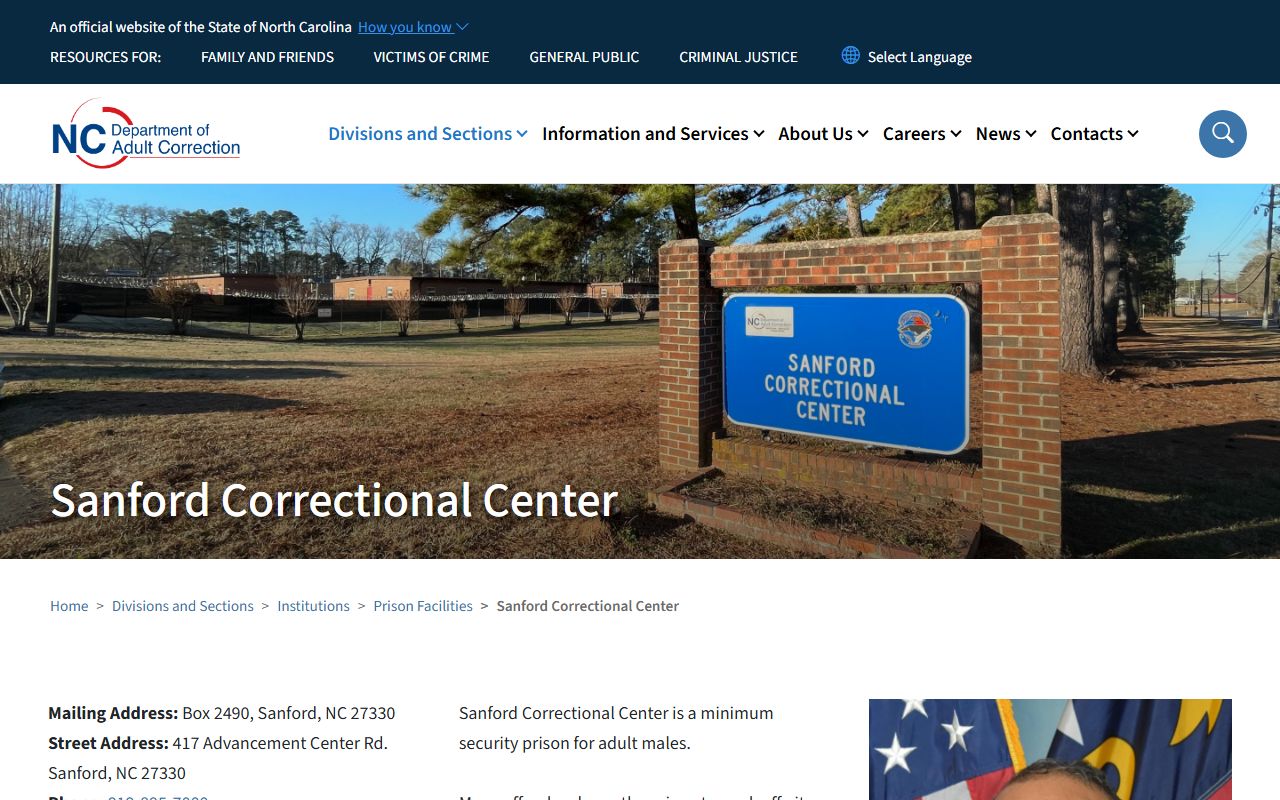
This state correctional page helps separate trial-court records from post-sentence custody records for cases that move beyond the county courthouse.